Suggested Resources
The quest for longitude
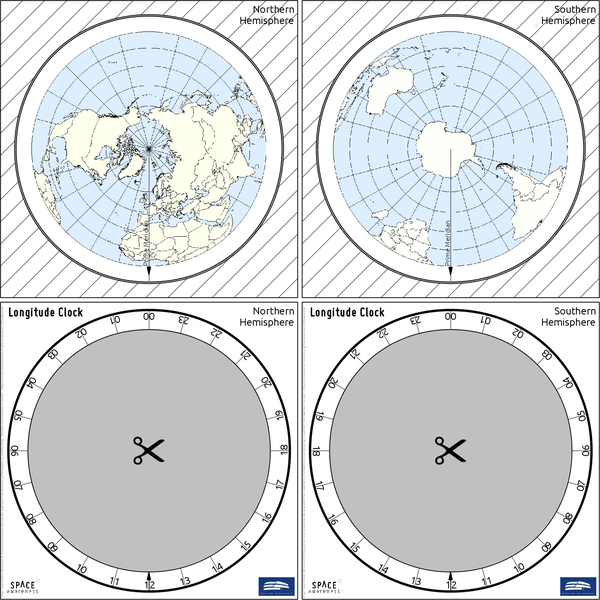
This activity highlights the navigational challenges in determining longitude from time measurements. Students build their own longitude clock that visualises in a simple way how to determine longitude via time measurements. They practise basic math, understanding the underlying fundamental concept, and they get an insight into the historic events that led to the invention of the first maritime timekeeper, following the steps of James Cook’s second voyage around the world.
The sky at your fingertips
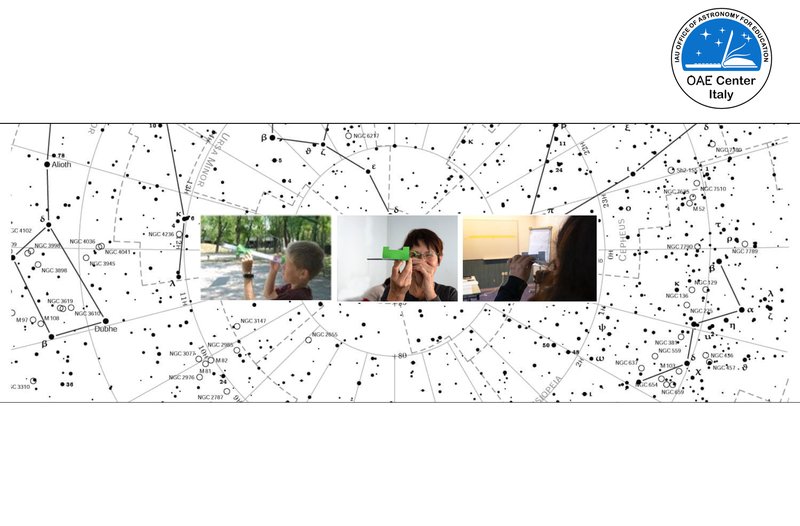
In this activity we will build a simple cross-staff to measure angles. We will show how angular distances can be measured using this simple self-made aid in order to determine the position of a celestial object on the celestial sphere. (Please note that this activity can be followed by the activity: Chasing the Moon )
The Sun in our box
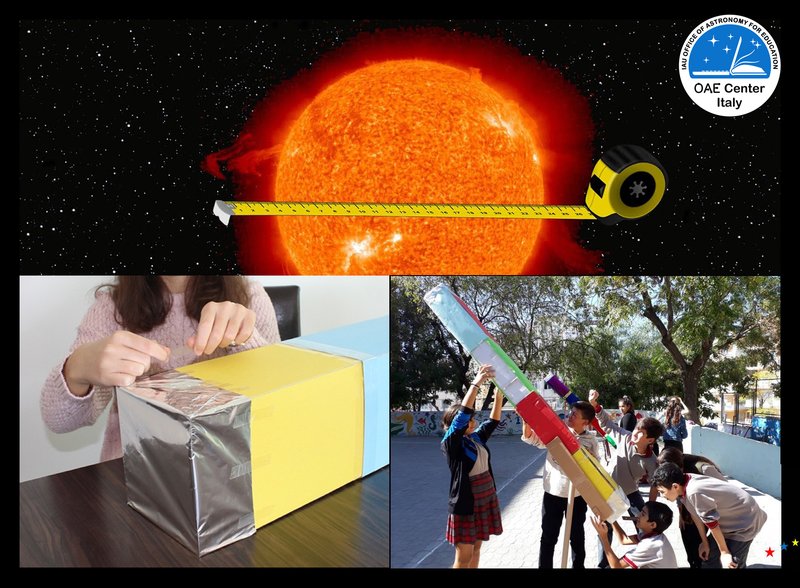
How big is the Sun? This activity uses some simple optics to project an image of our star by building and using a pinhole camera, and some simple geometry to determine the size of the Sun.
Touching the stars
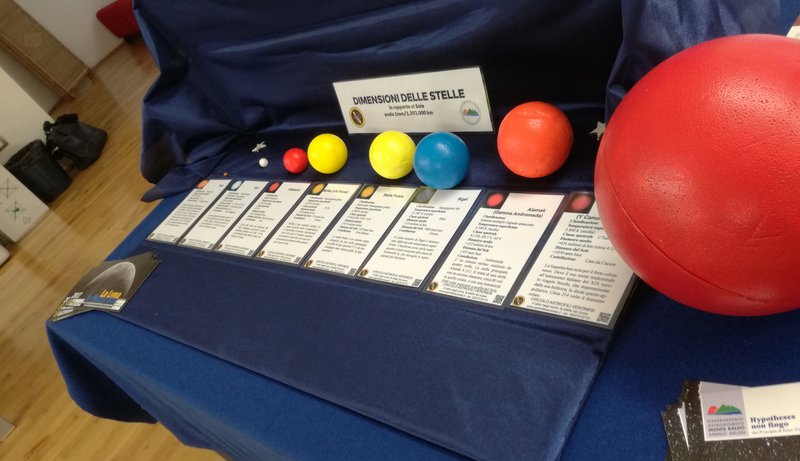
In this activity, you will learn about the dimensions of stars in comparison to the Sun with a set of polystyrene spheres. By using spheres of different colours, you will also learn about different types of stars and their evolution: from blue spheres, representing hot and young stars, to red spheres, symbolising cold and old stars.
Transforming water into acid… and back
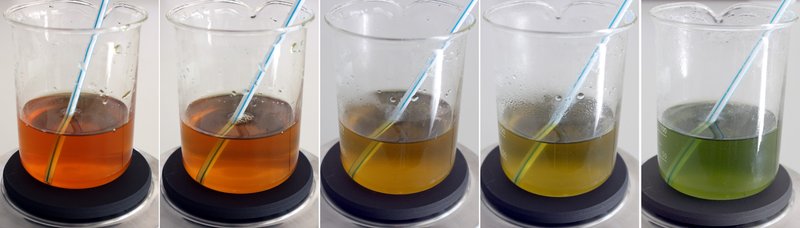
In the experiments of this activity students learn how to turn water into an acid by introducing carbon dioxide and how to neutralise the solution back to water. This is an analogy of what happens on Earth, when water is exposed to the main greenhouse gas, carbon dioxide, causing a threat to marine species and of life on Earth.
Valleys deep and mountains high
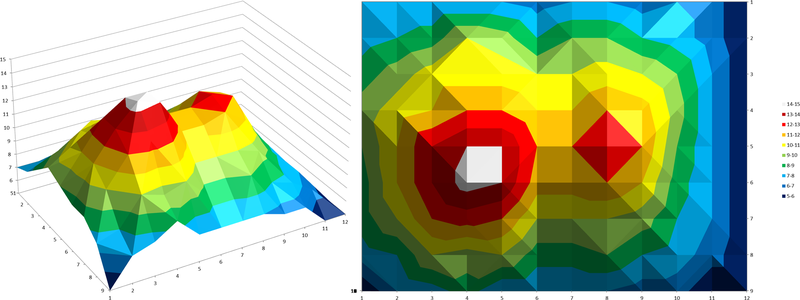
This activity deals with altitude measurements obtained with radar altimetry, a powerful tool used by satellites with low Earth orbits that helps in many different sectors like monitoring of climate changesindicators and disaster management. To simulate the radar operaion, a landscape model hidden inside a box is probed with a rod to obtain the altitude distribution on a regular grid. The data is then represented in three different maps: colour coding, contour map and computer-generated surface map, requiring varying levels of effort for construction.
Van gogh, art-painting and stellarium
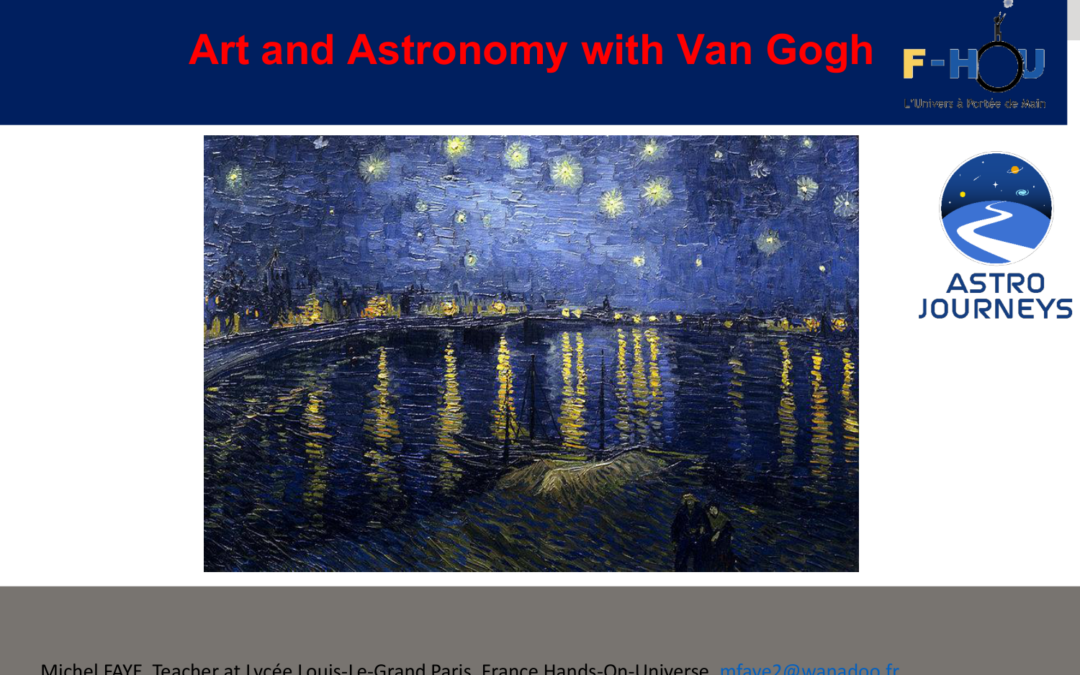
Art and Astronomy with Van Gogh Michel FAYE Teacher at Lycée Louis-Le-Grand Paris, France Hands-On-Universe, mfaye2@wanadoo.fr Suzanne FAYE, https://www.sciencesbourdetfaye.fr/uranie/ Adapted by Emmanuel Rollinde, LDAR/CYU, Professor of Astronomy Education, F-HOU, LDAR/CYU Fichier:Starry Night Over the Rhone.jpg
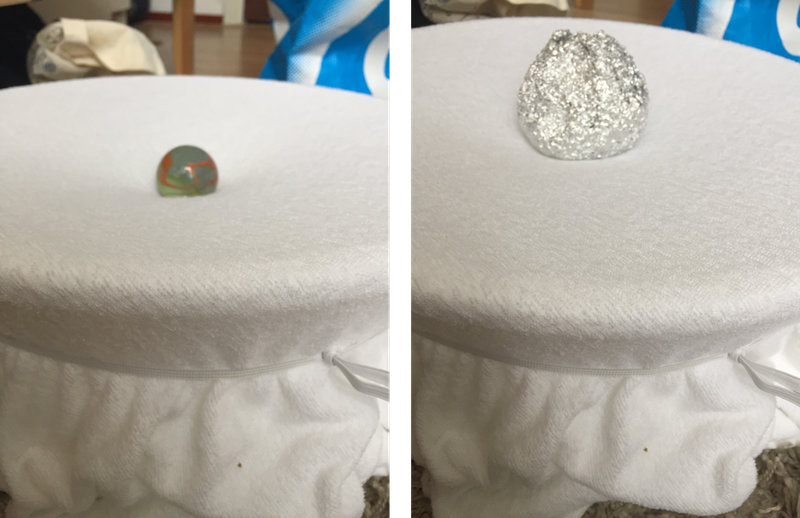
What is a black hole?
Let’s ask ourselves wht would happen if our Sun was replaced by a black hole, making some experiments to understand what a black hole is and how nothing can escape from its’ gravity.
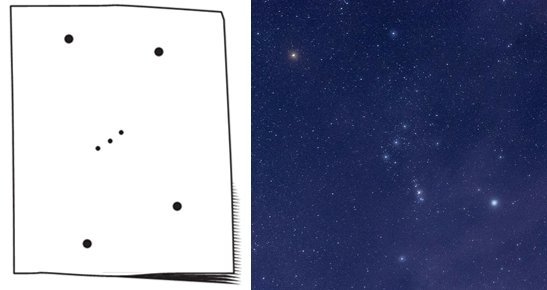
What is a Constellation?
Through a hands-on practical, students learn what a constellation looks like by understanding that a three-dimensional object looks different depending on our perspective. They learn that the stars in a constellation are far apart and not in the same plane.
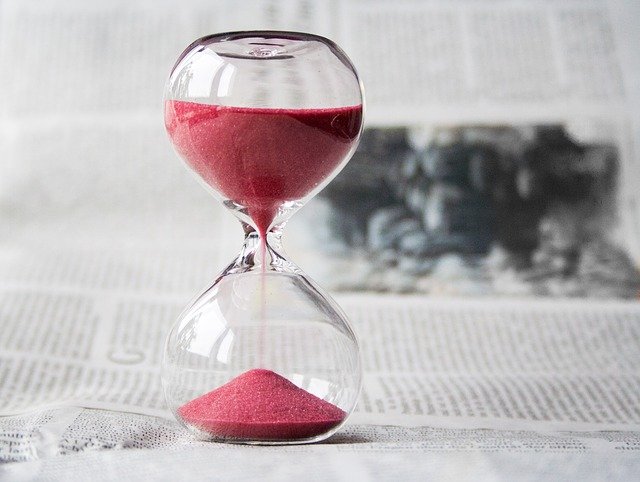
What is time?
In this activity, students will understand that it is difficult to tell the time without an instrument and will build and test an hourglass to measure time. They acquire an understanding of what causes day and night and comprehend time differences. Students will also get to know what instruments can be used to measure time and about different units of time.
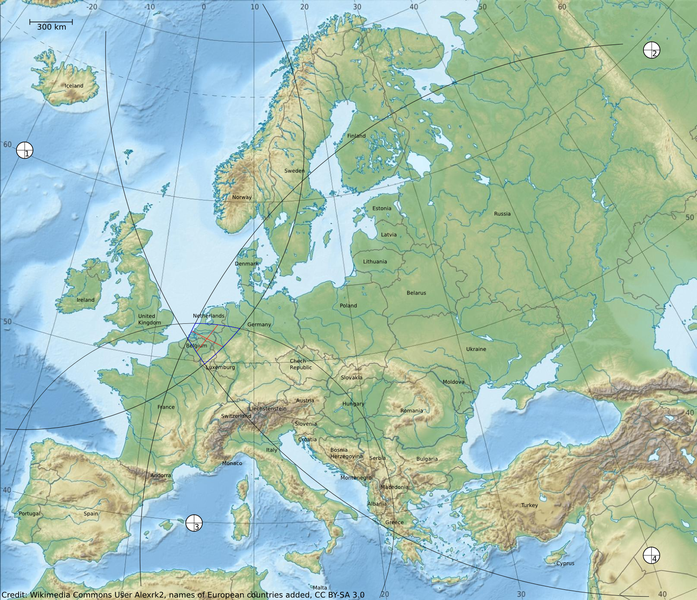
Where on Earth am I?
The students will understand the basic principle behind satellite-based positioning and navigation. This activity illustrates the technique of how a GPS receiver determines its location on Earth, applying the procedure to a simplified two-dimensional representation of a satellite configuration above the Earth using only basic arithmetic.
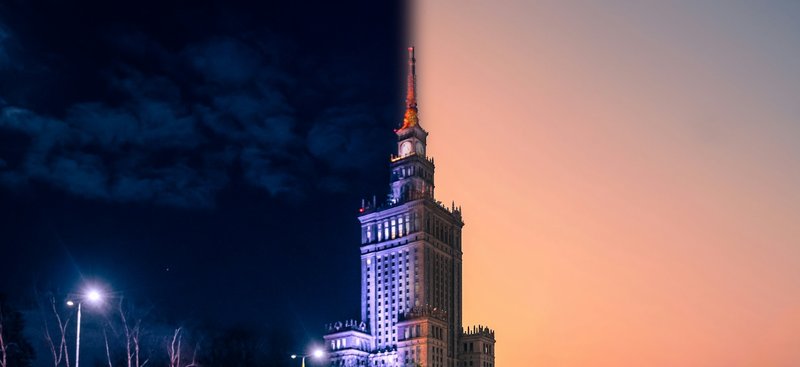
Why do we have Day and Night?
With this hands-on activity students will build a simple model of Earth to understand that its rotation causes the occurrence of day and night and the fact that two people on opposite sides will not experience simultaneous daytime or night-time.