Feb 5, 2026 | Big Ideia 10, Exoplanet, FHOU, Resource, Star
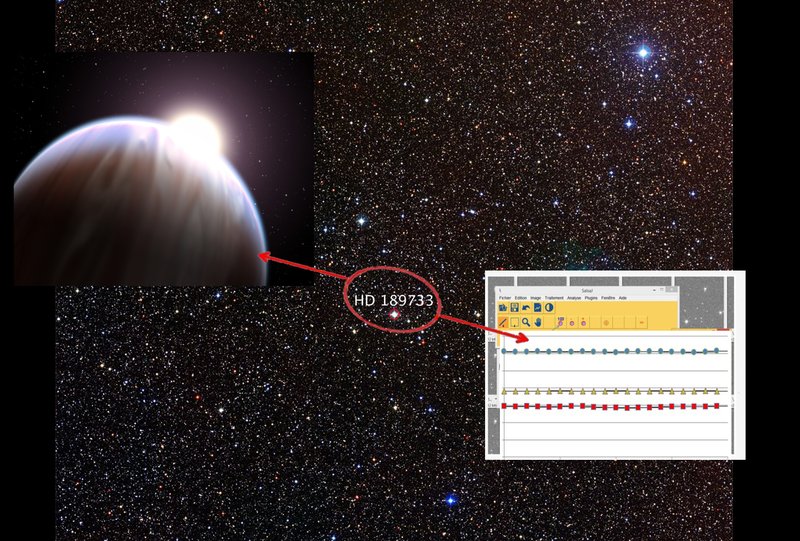
In this activity you will learn how to reveal the presence of a planet orbiting a star other than the Sun using the “transit method”. You will use an open source software to observe a time series of images of the sky taken by the Spitzer Space Infrared Telescope, and...
Feb 5, 2026 | Big Ideia 4, Big Ideia 6, Black Hole, FHOU, Resource, Star
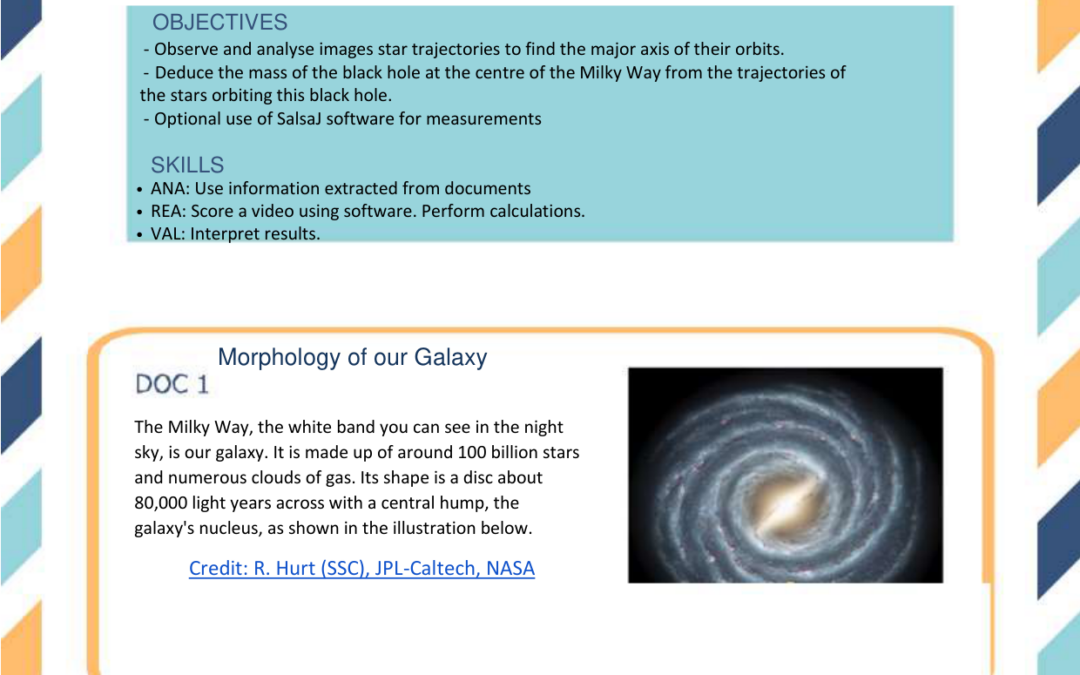
Students analyze time-series images of stars orbiting the Galactic center to reconstruct their trajectories and identify orbital shapes. They extract quantitative data (positions, distances, periods) and model the orbit of a reference star as an ellipse. Using these...
Feb 5, 2026 | Big Ideia 7, FHOU, Resource, Solar System
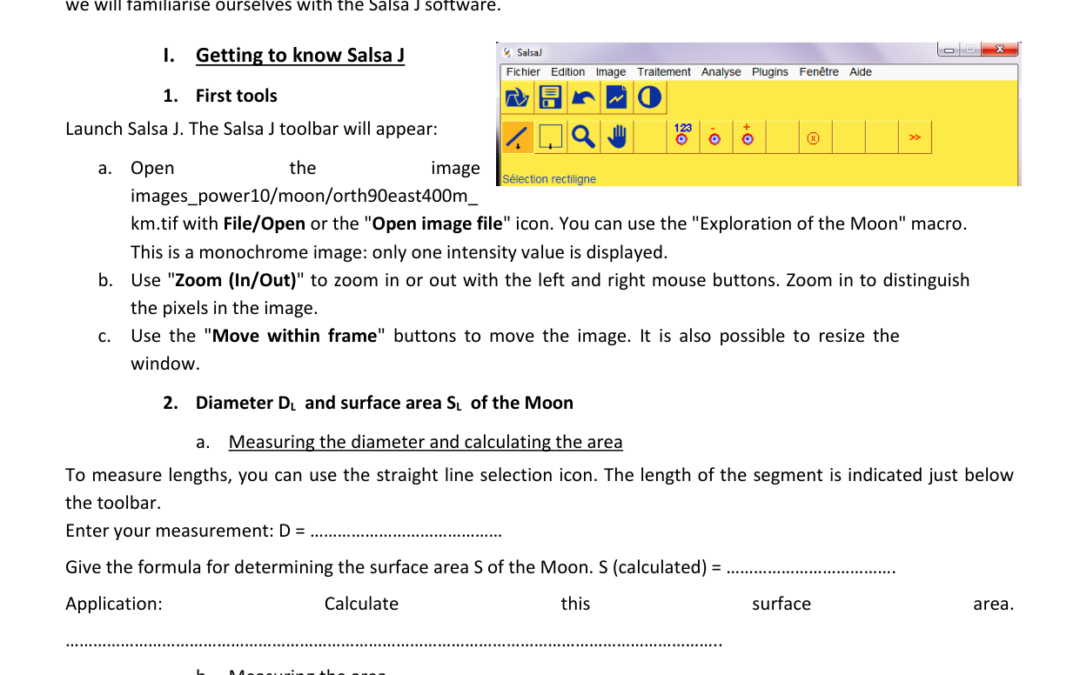
There are two types of regions on the Moon: craters and seas. Craters are created when a large meteorite hits the Moon. Seas are formed during geological events that flatten large areas of the Moon. Some regions have been explored by other astronauts who have brought...
Feb 5, 2026 | FHOU, Resource
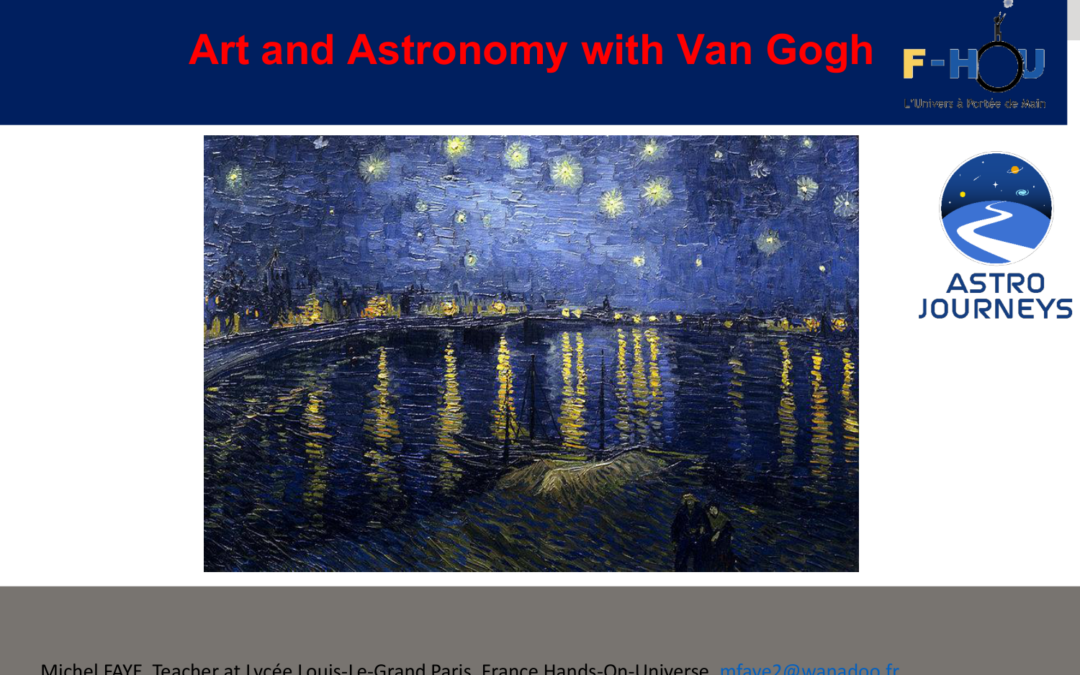
Students analyze Van Gogh’s painting by identifying astronomical clues (Moon phase, bright object, horizon light) and formulating hypotheses about the observed sky. Using Stellarium, they simulate the sky from a given location and time to match these clues and refine...
Feb 5, 2026 | Big Ideia 10, Big Ideia 4, Big Ideia 6, Exoplanet, FHOU, Resource, Star
Students analyze spectral data of a star over time and measure the shift of absorption lines to determine its radial velocity. They model the periodic variation of this velocity as the effect of an orbiting companion using a sinusoidal function. From this model, they...
Feb 5, 2026 | Big Ideia 3, Big Ideia 4, Big Ideia 7, Big Ideia 8, FHOU, Resource
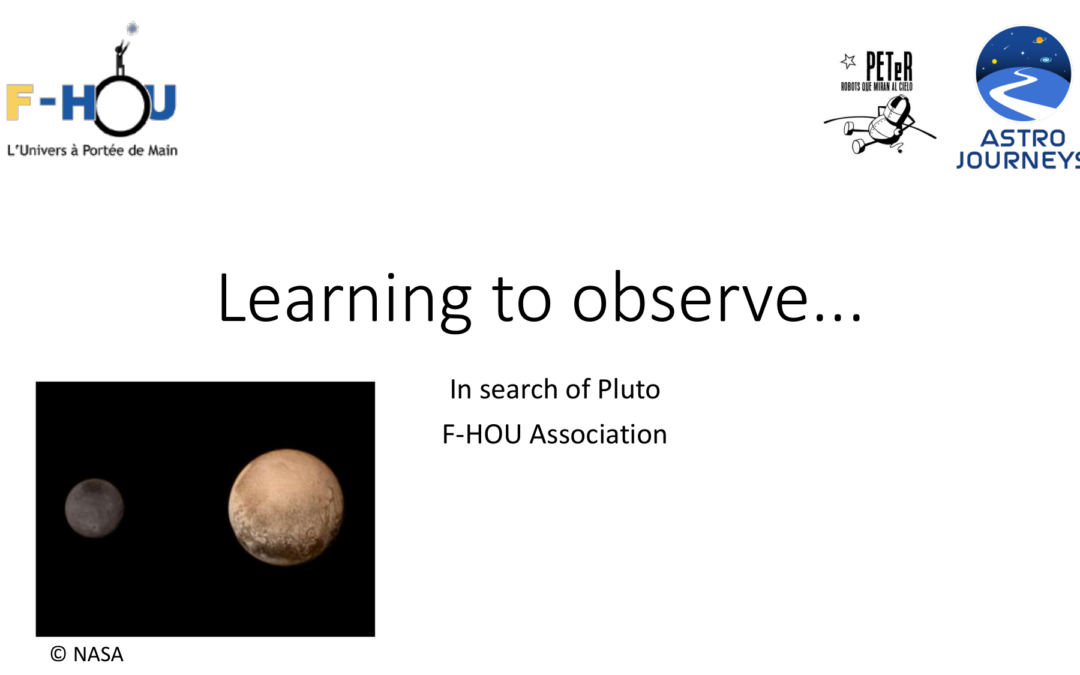
Students compare astronomical images taken at different dates to identify a moving object among fixed stars. They analyze brightness and positional changes, testing hypotheses about visibility and motion, including retrograde effects. Through this investigation, they...