Suggested Resources
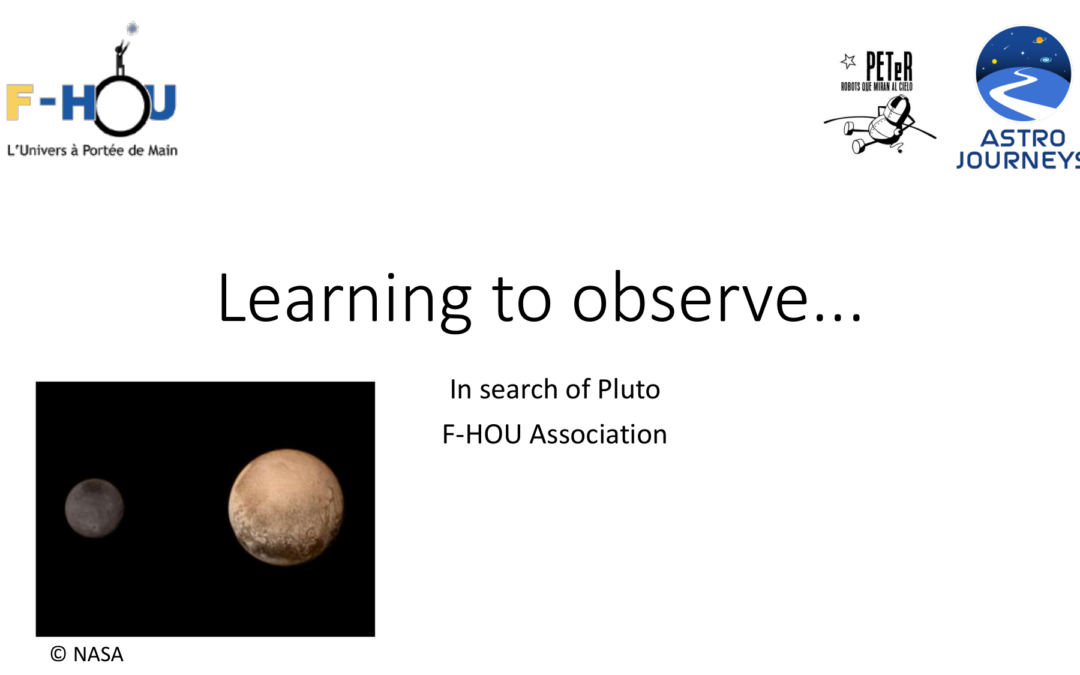
Search for pluto
Learning to observe… In search of Pluto F-HOU Association © NASA Learning to observe…
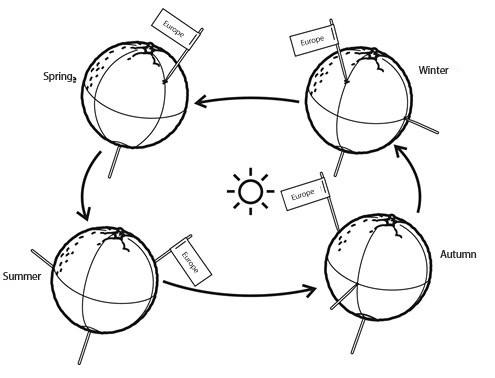
Seasons around the World
Build a model of the Earth and understand the concept of seasons around the world! After completing the activity, students learn that seasons are determined by the angle at which the rays of the Sun fall on the Earth. So at the Equator there is very little difference between the seasons.
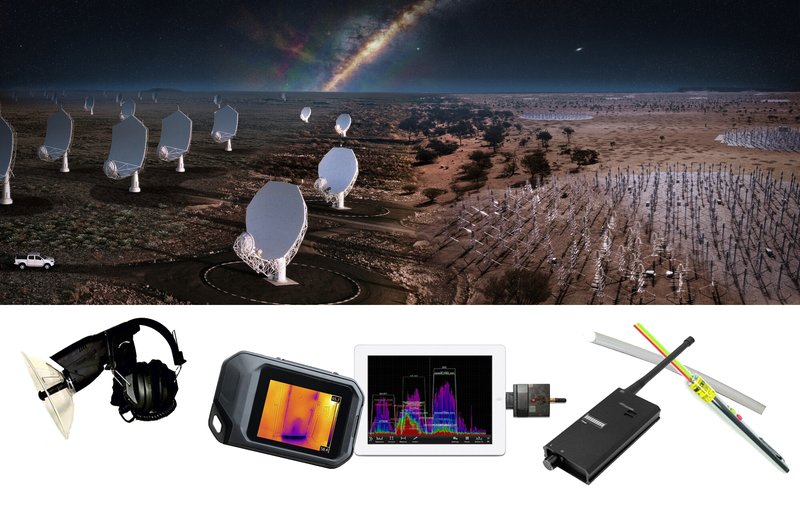
SKAO and the mysteries of invisible light
In this collection of activities, students will learn about the existence of light beyond what humans can see with their eyes, and how these invisible types of light provide astronomers with a new view of the Universe. Using laboratory equipment, students will experiment with infrared light, detect the existence of radio waves, and understand the basic principles of signal collection and data transfer of telescopes. They will also learn how all this is related to the Square Kilometre Array Observatory (SKAO), the largest radio telescope in the world, currently under construction in remote areas of South Africa and Australia. – Cover Image: Composite image of the SKAO telescopes and hardware needed for the activity. Credits for above image: Artist’s impression by SKAO.
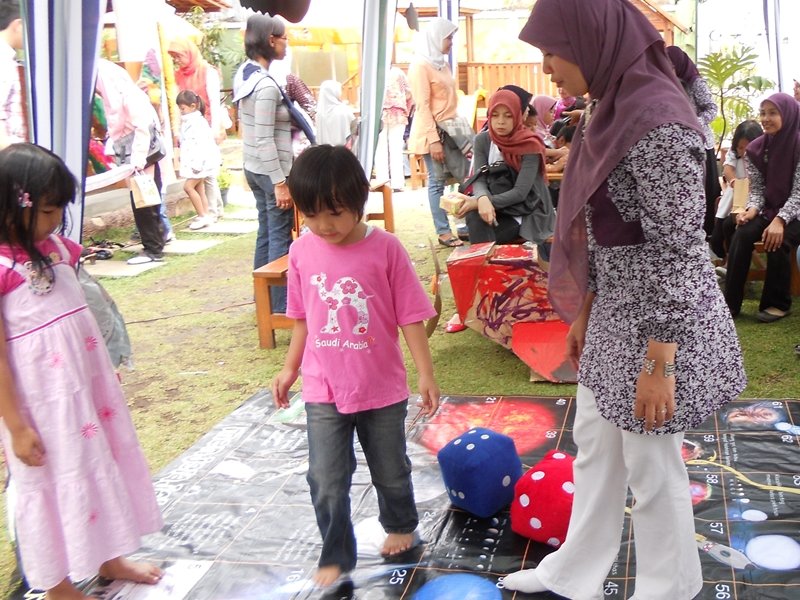
Snakes & Ladders Game
This Astronomy themed snakes and ladders game engages students to learn about astronomical objects as they play forward. Students will learn astronomy, but also improve counting and listening skills.
Solar activity: How it evolves with time
Understanding solar activity is relevant because the physical phenomena that cause it cannot be studied on Earth, and also because it allows us to predict space weather. Solar storms (coronal mass ejections) carry large amounts of charged particles that form auroras and can also damage satellites and, if they are very intense, even power grids. The Sun began to be studied in 1609 when Galileo Galilei invented the telescope (he studied it by projecting it onto a white surface, since looking direc…
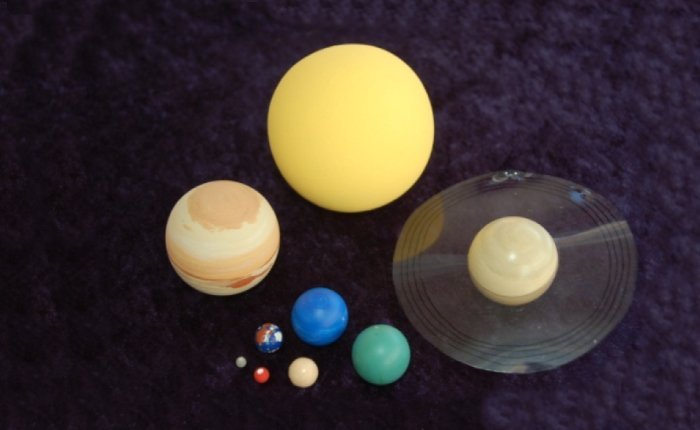
Solar System model
Students will prepare a model of the Solar System by placing the planets in the right order relative to the Sun (even if the Sun and planets will not be in exactly in the right proportions). The students will use a a pre-built kit, or they will learn to use papier-mâché or other household materials. By the end of the activity, children will learn about the actual sizes and relative positions of the different planets.
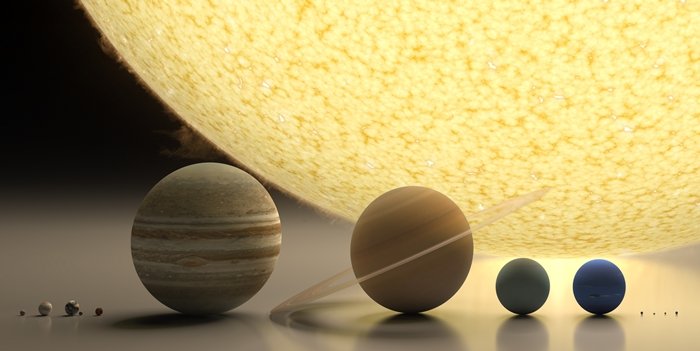
Solar System model on a city map
The distances between Solar System bodies are great and planets are really tiny if compared to the Sun. In this hands-on activity students build a scale model of the Solar System on their city-map learning how a scale model is built. They will also be guided to reflect on how the model changes if only a single characteristic of the celestial body is taken into account in the calculations.
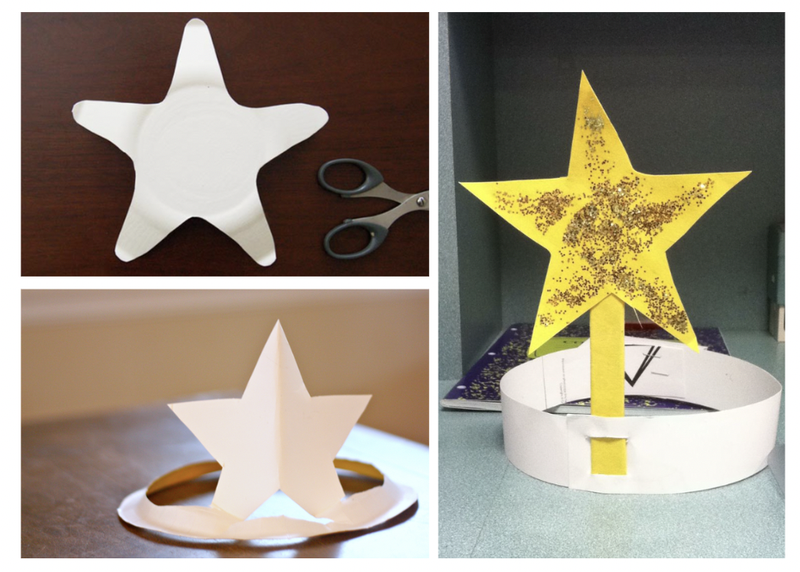
Star Hats
Draw artistic and scientific representations of the stars and learn about them. In this activity, the drawings are used by students to create star hats, which they then are presented to the class.
Star in a Box: Advanced
An activity exploring the life-cycle of stars using the Star in a Box interactive web resource. This activity is for advanced level students either doing A-level physics (or other national equivalent for 16-18 year olds) or the most advanced GCSE students (or equivalent 16 year olds). This activity would fit well within an introductory course for university and community college students.
Star in a Box: High School
With this Activity, students will learn in an interactive and fun way about the lifecycle of different stars using an App called “Star in a Box”. They will discover the Hertzsprung-Russell diagram that describes the relationship between a star’s mass and its age.
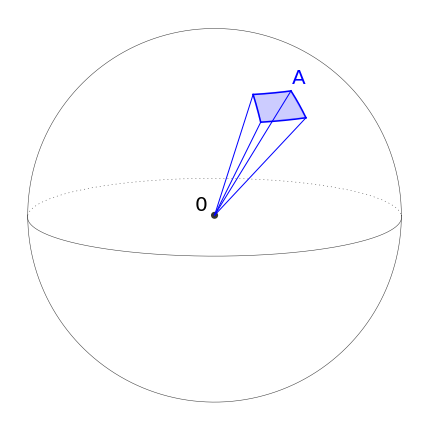
Street Lights as Standard Candles
Using everyday objects such as streetlights, students can understand how astronomers use astronomical standard candles to measure astronomical distances, as well as their possible error sources. This practical activity also introduces students to digital image processing and serve as a stepping stone for later activities involving astrophotography, in particular those dealing with photometry.
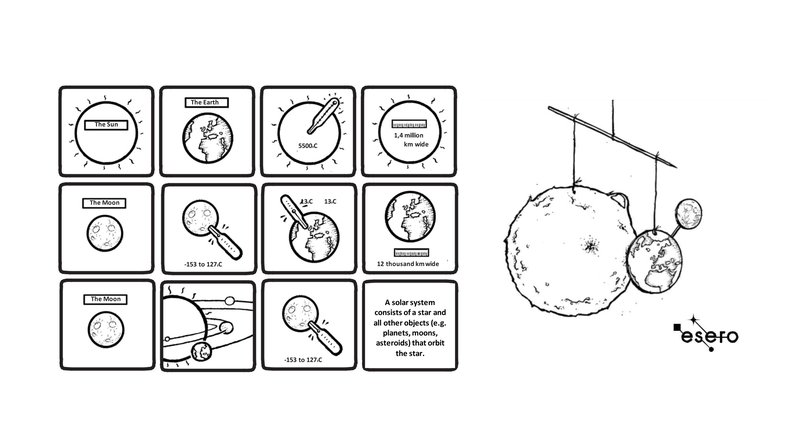
Sun, Earth and Moon model
In this activity, students make a mobile model of the Sun, Earth and Moon system and play a memory game with cards. They learn that the Earth revolves around the Sun and the Moon around the Earth. Students learn that the Sun is a star and some additional characteristics about the Sun, Earth, and Moon.
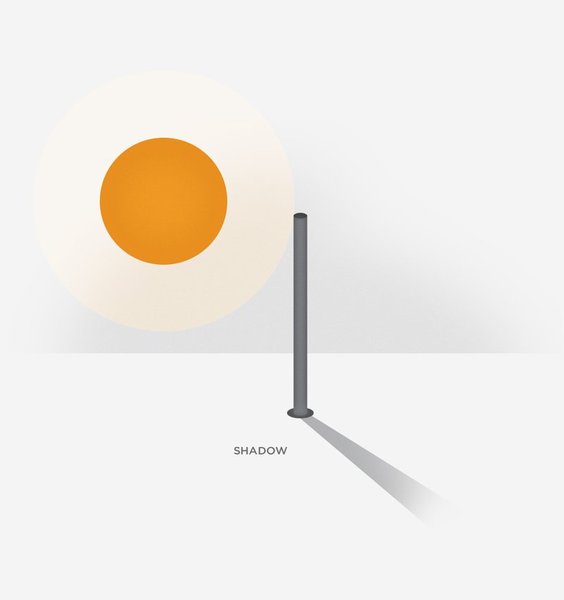
Sun’s shadow
The activity demonstrates the concept of how the Sun’s position in the sky influences the shadows that are cast, making a relation between shadow length and the time of day and year. The Sun’s shadow has enabled generation after generation to observe changes in the time of day and changes in seasons: measuring the shadow length is necessary to learn the principle behind time and seasons.
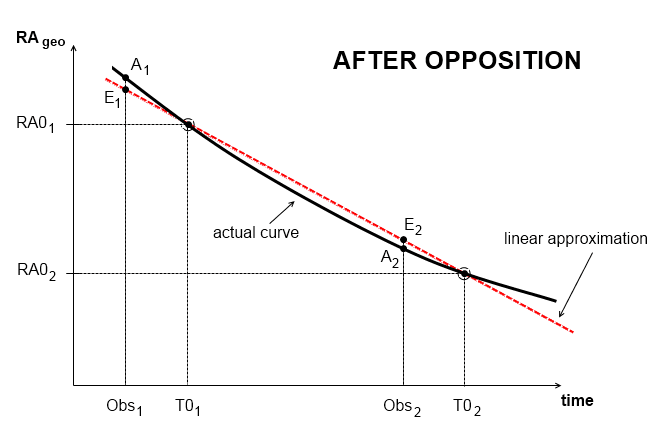
The 4-Point backyard diurnal parallax method
With this observational, hands-on activity, students can measure the distance of a selected asteroid within an accuracy of 5% in just 2 observational nights, using a telescope, online software and some modest amateur gear. Students will learn that an astronomical observational project requires research, planning and execution and most likely, they will understand that astronomy is one of the few areas where scientific knowledge contribution is still within the reach of serious amateurs.
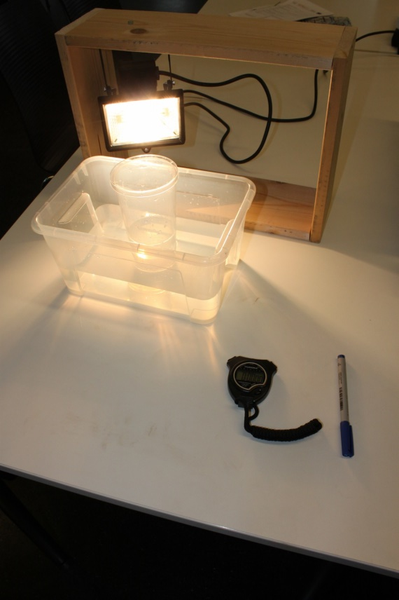
The Big Meltdown
In this activity, students will carry out two simple experiments to simulate the melting of land and sea ice on Earth, to understand the different effects that this melting down has on global sea levels and how it is relevant to climate change.
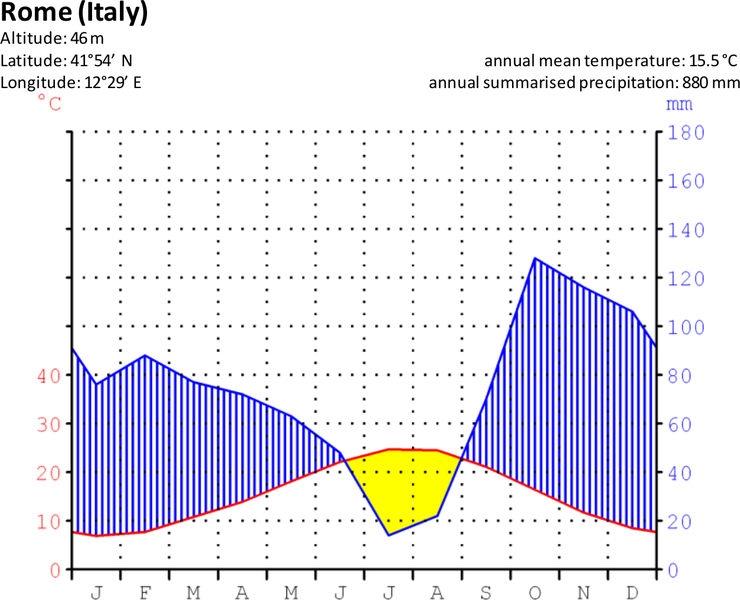
The Climate in numbers and graphs
With this activity, students can understand that climate is the long-term average of weather activity and that climate zones are defined depending on average conditions, learning to apply and interpret climate charts. Dealing with climate, students will also learn some basic statistical tools like average.
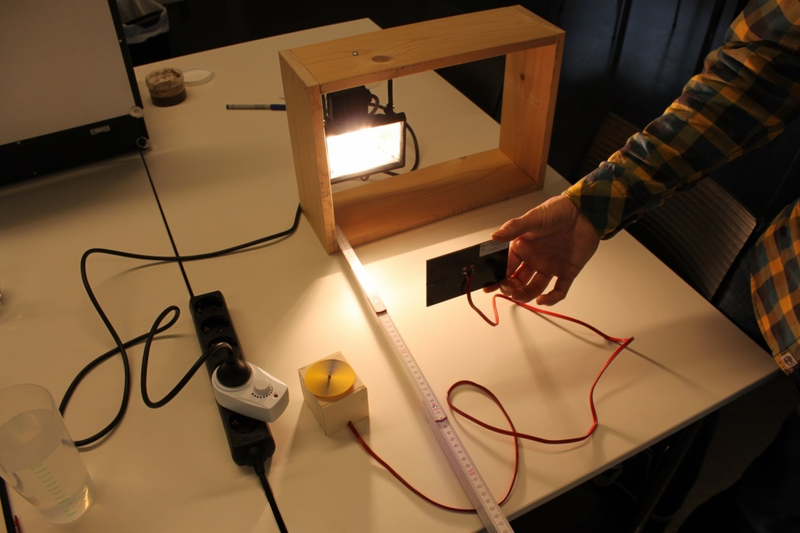
The Engine of Life
With this activity, students learn about the habitable zones of planetary systems with a simple experiment that demonstrates how the amount of radiation received by a body depends on its distance from the source, introducing the “habitable zone”, where liquid water can be present in certain boundary conditions. Students can also understand the composition of a real exoplanetary system and its habitable zone by calculating and drawing a scaled model of it.
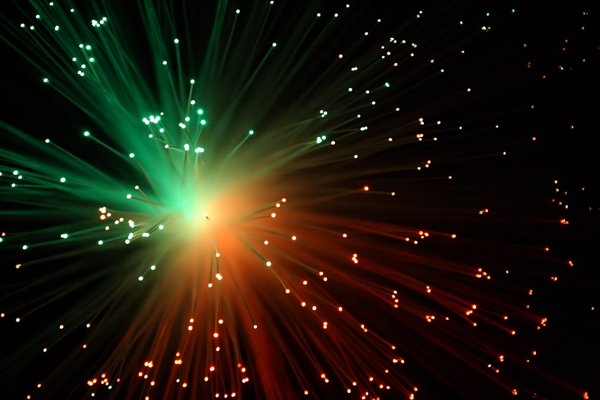
The Fibre Optic Cable Class
With this activity students will uunderstand the basic concepts of light and fibre optics, and how they are used in everydaylife communication and in astronomy (specifically, a better understanding of SDSS and spectrography). Students will be guided throught a set of activities: they will be involeved in a hands-on acitivty to learn bascis properties of light, they will analyse information gathered by the Sloan Digital Sky and finally they will be introduced in the citizen science project Galaxy Zoo.
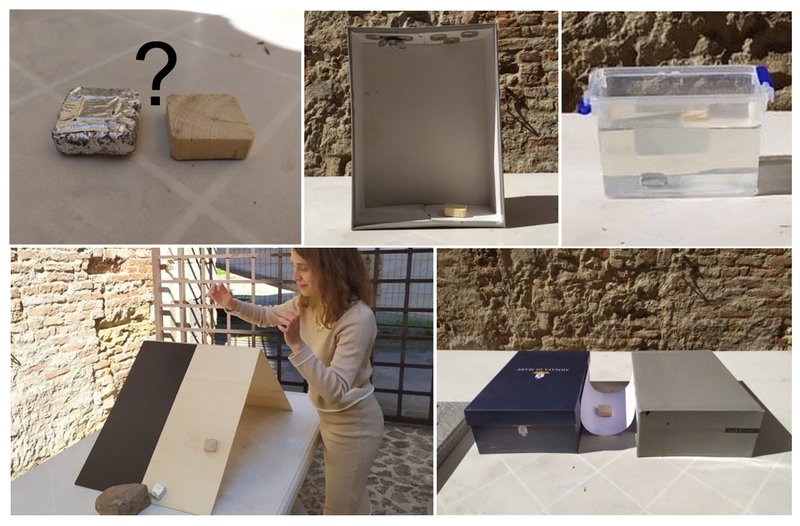
The gravity battle
In this hands-on activity, participants will experience the “tug-of-war” between gravity and other forces, namely: buoyant force, friction force, magnetic force and normal force. They will test how different types of materials float, and use an inclined plane to investigate how the smoothness of surfaces and their inclination affect the speed of a falling object. Participants will also experience how magnets may prevent metal objects from falling and how different structures can keep the object in a specific position.
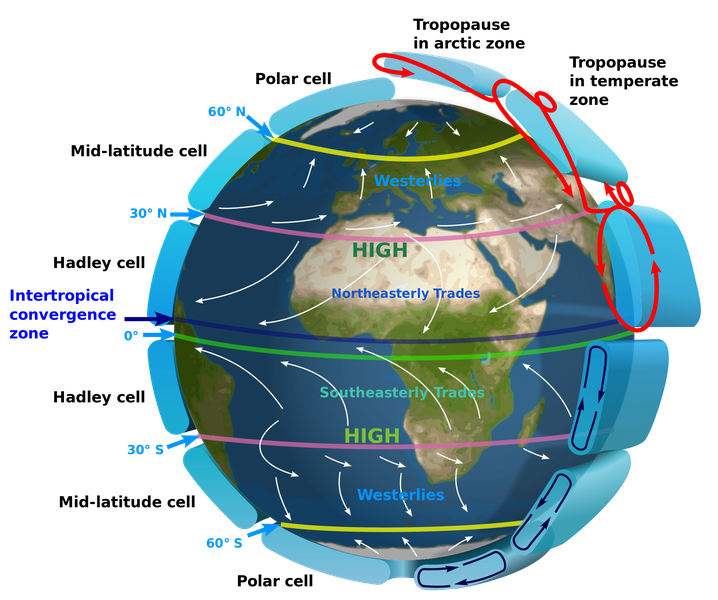
The intertropical convergence zone
This activity illustrates the power of the Sun that drives a global air circulation system that is also responsible for tropical and subtropical climate zones. Through experiments, students learn how heated air rises above cool air and how a continuous heat source produces air convection streams that can even drive a propeller. Students then apply what they have learnt to the big picture of the global air circulation system in the equatorial region in a large-scale context.