Suggested Resources
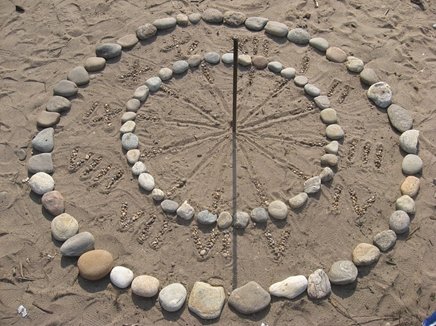
Making a Sundial
In this activity, students approach the notion of time and how time can be measured. They build and use a sundial, learning that you can tell the time using the Sun and discovering that a long time ago, it was much more difficult to tell the time than it is today. They will also compare the accuracy and precision of this method with modern ways of telling time.
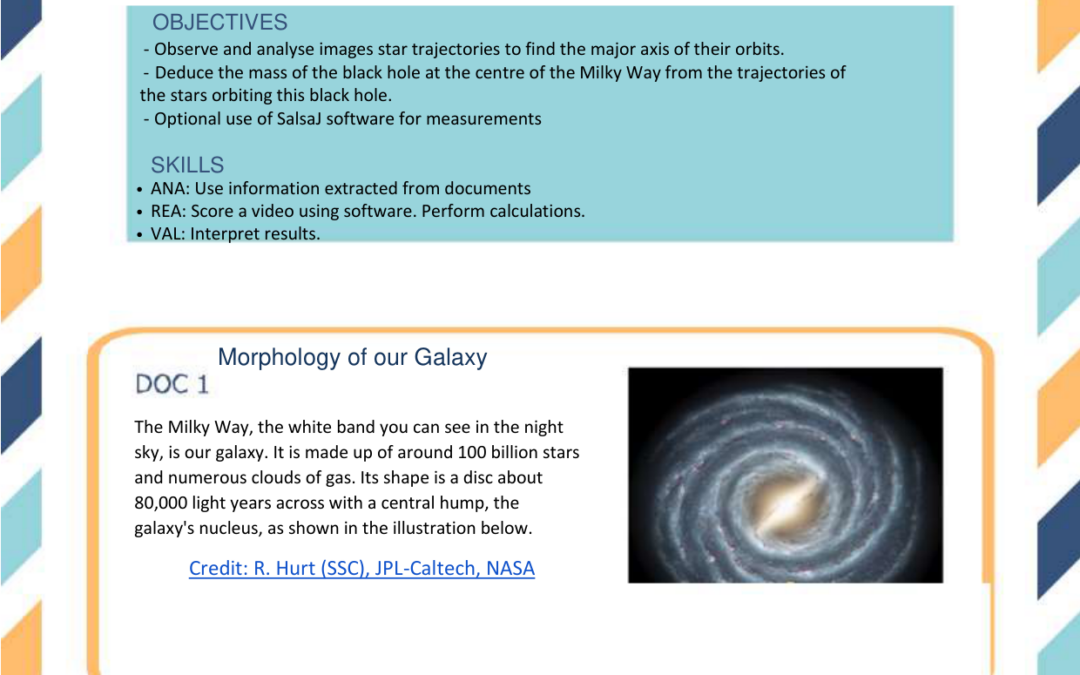
Mass of the black hole by observation of stars’ orbit
M.PAUPY TERMINALE SPÉ: EXPERIMENTAL ACTIVITY IN PHYSICS n°9 Bis After the resource provided by the association F-HOU
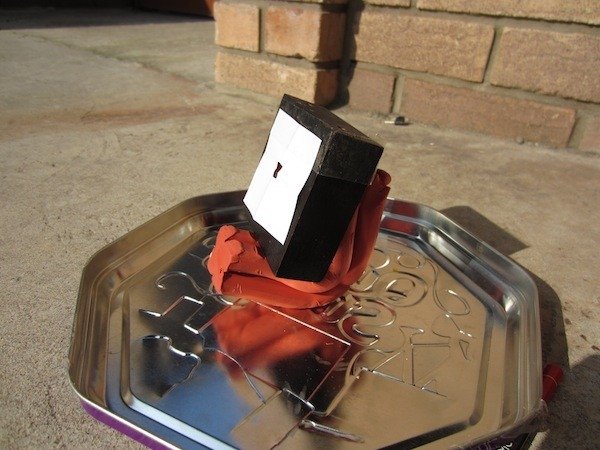
Measure the Solar Diameter
In this activity you will calculate the Sun’s diameter with a hands-on simple experiment done with simple, household materials and -of course- without looking directly at the Sun. You will just need to learn how to calculate ratios, a mirror, a stop-watch, and 20 min of a sunny day.
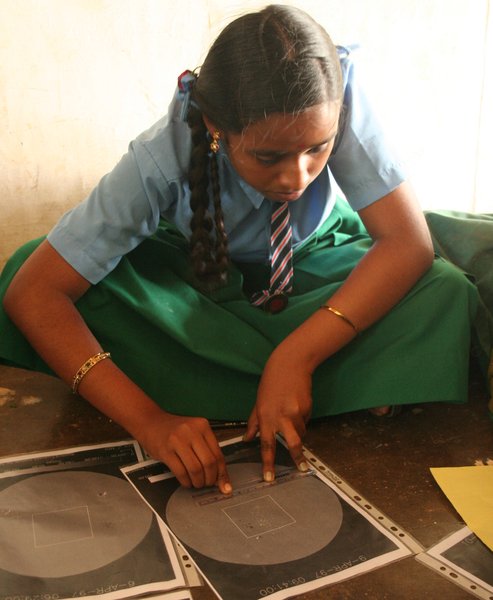
Measure the Sun’s Rotation Period
In this hands-on activity, students will apply the definition of average speed to a “real-case” astronomical phenomenon, finding out the Sun’s rotation period using real astronomical images. This activity can also be performed on computers.
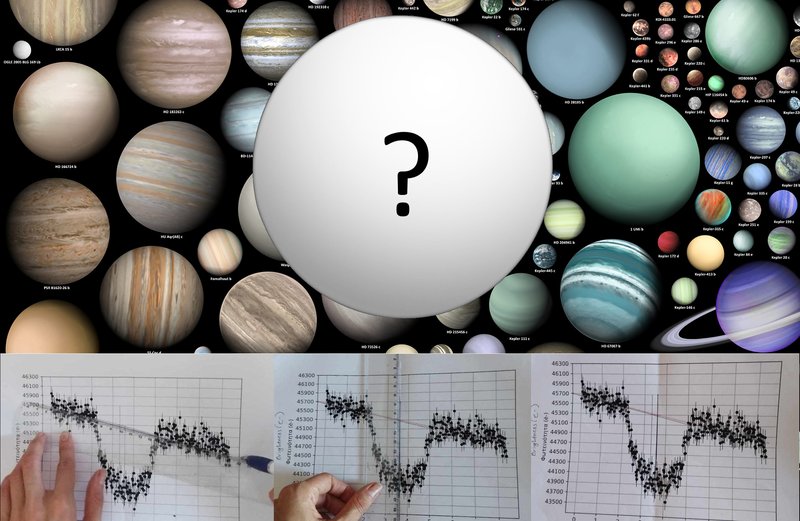
Measuring an exoplanet
Exoplanets are really far away! How do we manage to detect them and get information about their nature? Particularly, how do we know how big or small they are? In this activity you will use real data of a telescope to measure the size of an exoplanet, just as astronomers do.
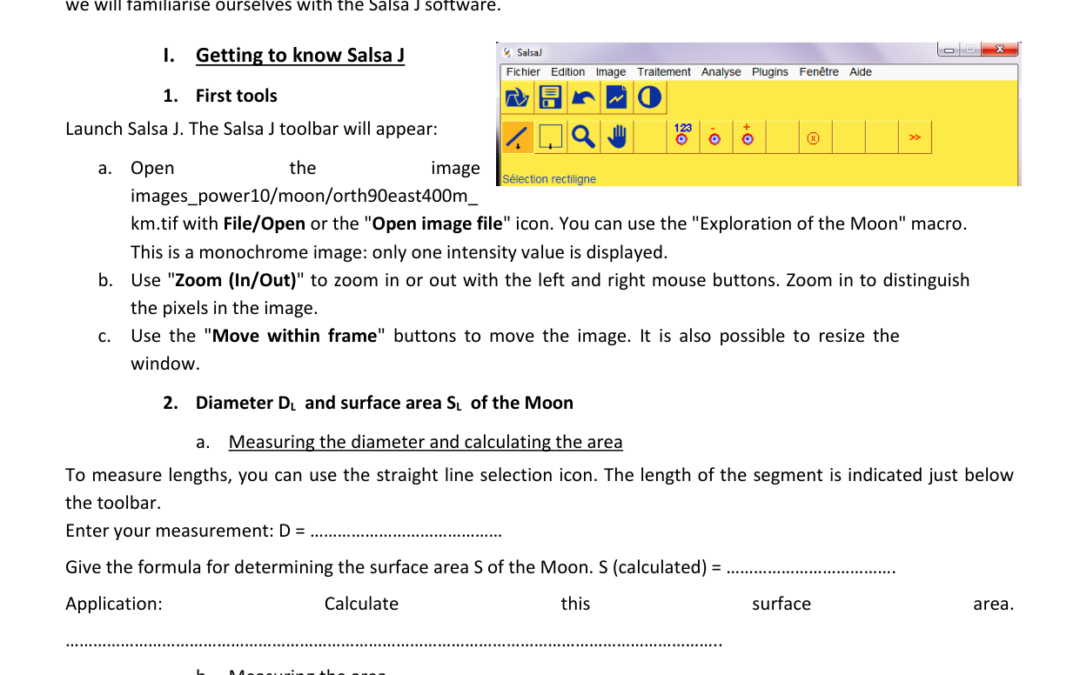
Measuring and dating Lunar Craters with Salsa J
There are two types of regions on the Moon: craters and seas. Craters are created when a large meteorite hits the Moon. Seas are formed during geological events that flatten large areas of the Moon. Some regions have been explored by other astronauts who have brought back samples. Thanks to their analysis, we have been able to determine when these regions were formed. However, it is not possible to take samples from everywhere on the Moon.
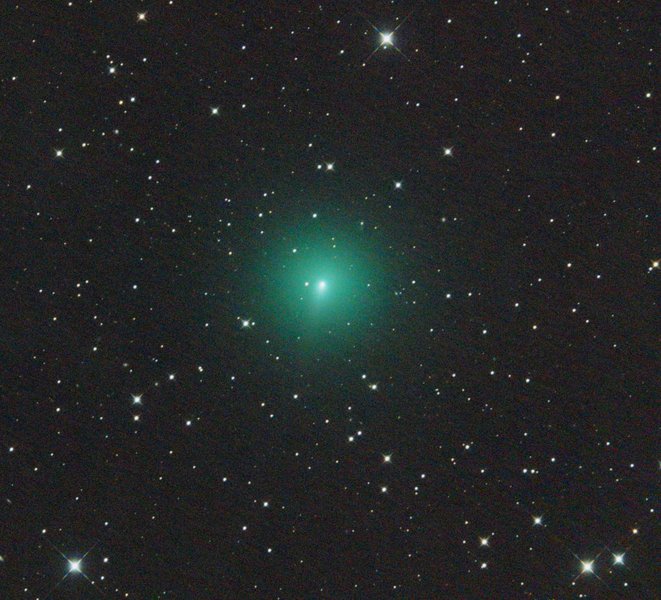
Measuring the average speed of a comet
Using telescope images of comet C/2019 Y4 we calculate its average speed and understand what a physical quantity is.
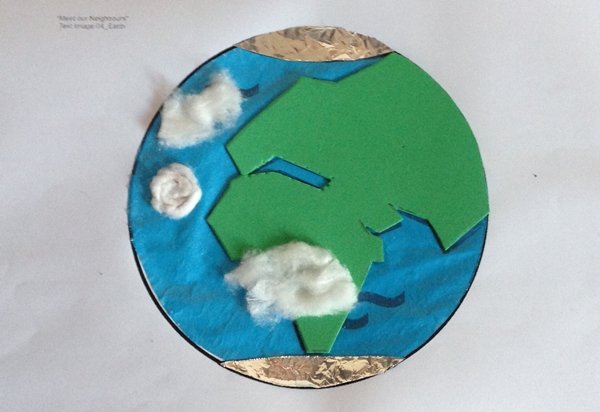
Meet our home: planet Earth
Learn how to build a tactile version of the Earth using cheap, household items andhow to use this model to identify the different characteristics of the planet. This cheap, tactile version of our planet is a great resource to explore its features for both visually impaired and normal vision students.
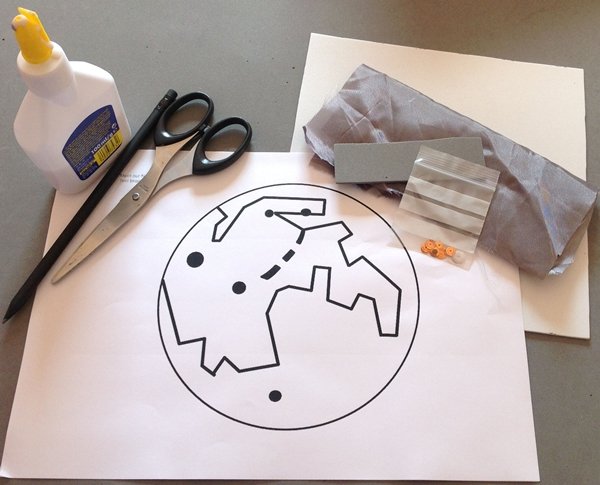
Meet our neighbours: Moon
Let’s build a tactile version of the Moon using cheap, household items. We can use this model to identify the different tactile characteristics of our satellite. This cheap, tactile version of the moon is a great resource to explore lunar features for both visually impaired and normal vision students.
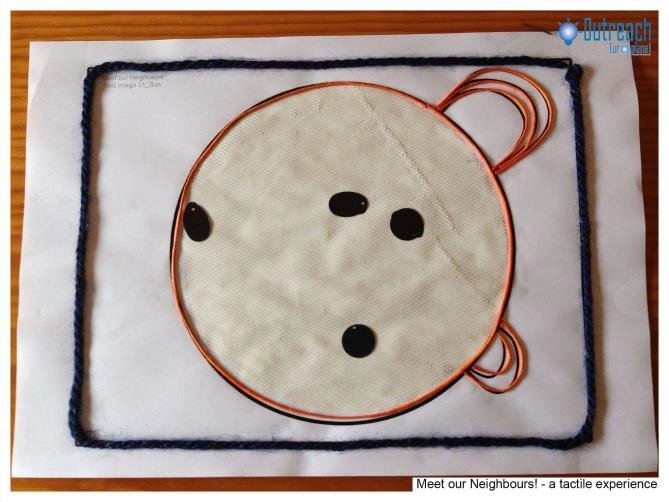
Meet our neighbours: Sun
Using cheap, household items, we will build a tactile version of the Sun that can be used to identify the different characteristics of our star, like sunsposts. This cheap, tactile version of the Sun is a great resource to explore a star for both visually impaired and normal vision students.
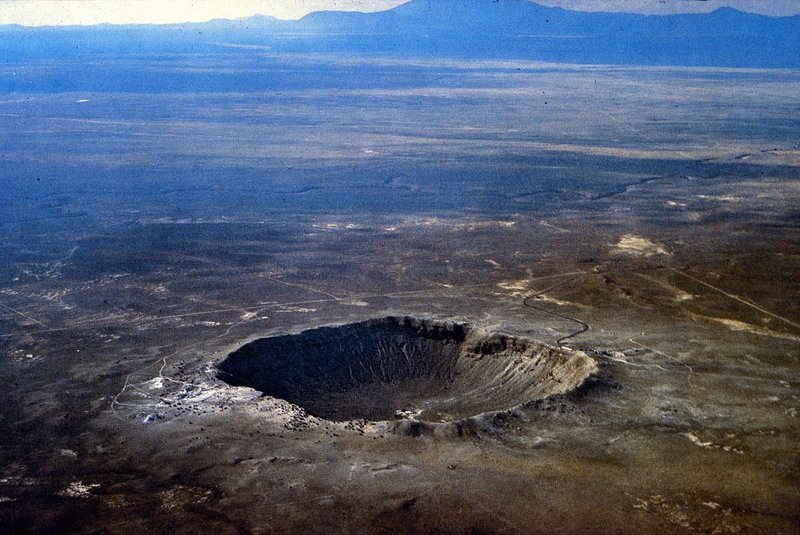
Meteoroids, Meteors and Meteorites
With this activity the students learn the difference between meteoroids, meteors and meteorites, finally discovering what a “shooting star” is, thanks to simple, hands-on activities. They will also be able to get an idea of how the impact of asteroids and other celestial bodies can affect life on Earth.
Model of a Black Hole
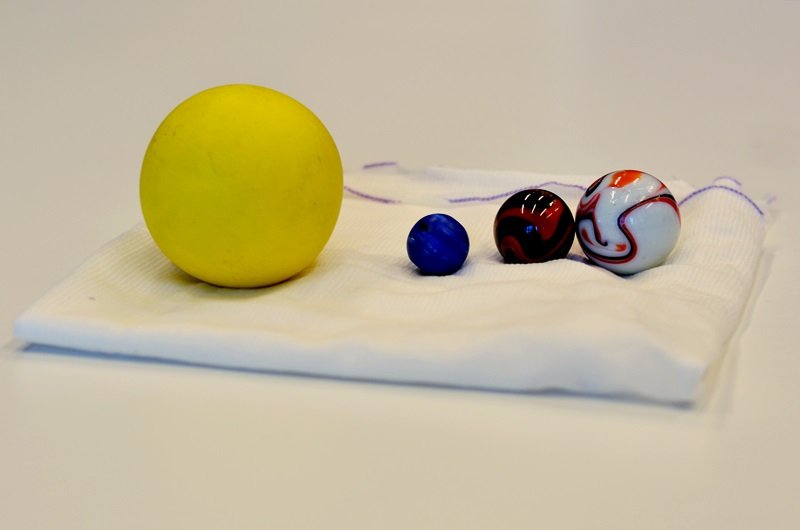
With this fun, hands-on activity, students will build an interactive model of a black hole using low-cost and easy to find material gaining a basic understanding of what a black hole is and how its gravity affects space-time.
Moving constellations
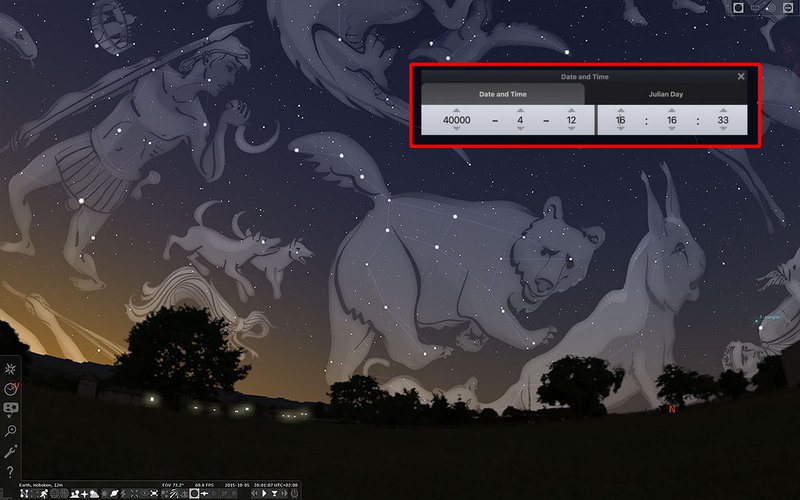
We usually think that stars are fixed in the sky and that their mutual positions do not change in time. Ancient civilizations built their religious and philosophical systems on this empirical evidence. However, we now know that this is not true; stars have proper motions, meaning that their position changes with time. The reasons why the measurements of the proper motions were lagging is twofold: stars move on a time scale of tens of thousands of years, too long when compared with human lifetime, and the measurement of the proper motion requires very precise and accurate space observing facilities. This activity intends to show practically this motion in action, using free software, satellite data and other accessible tools that give evidence of how constellations shapes evolve in time.
Navigate like a Viking – Use the Sun, not your phone!
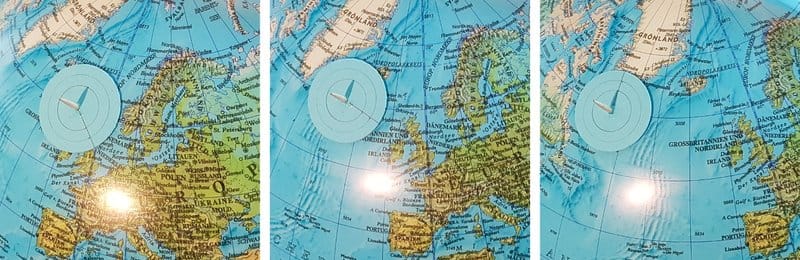
In this hands-on activity, students will imagine themselves as a 9th century Viking who has to use the Sun to navigate across the North Sea. They will build their own navigational tool, test its functionality and simulate a voyage from southern Scandinavia to Greenland without any modern device like GPS receivers in a smartphone. In addition, they will learn about the history of the Vikings, who built the most advanced ships of their time in Europe.
Navigating with the Kamal – Northern Hemisphere
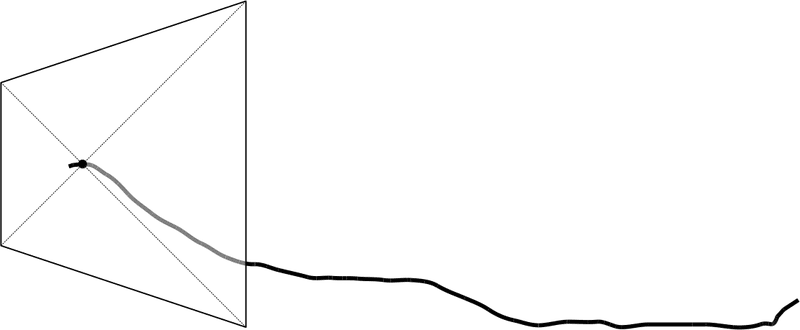
With this activity, the students will learn how the Arabian sailors navigated at Sea many centuries ago, building and learning how to use a kamal, a simple tool to measure the elevations of stars and our position on Earth. This activity uses the example of the kamal to demonstrate how navigation at sea can be successful with some knowledge about astronomy combined with simple tools and some basic math. The students also learn some major aspects of the history of navigation, getting a feeling how it was in ancient times to find one’s way on the oceans.
Navigation in the ancient Mediterranean and beyond
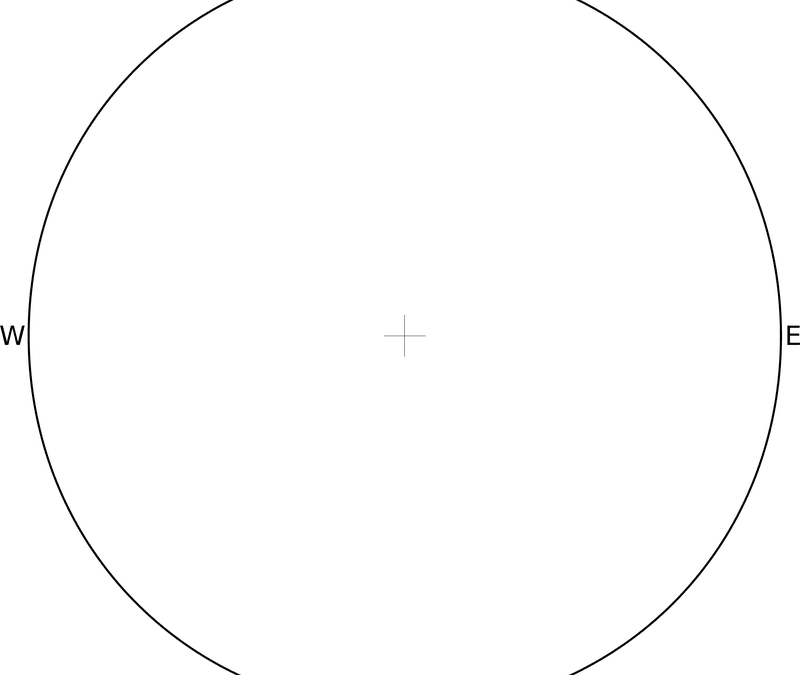
An insight into the navigational methods of the Mediterranean Civilizations of the Bronze Age: students explore the link between history and astronomical knowledge with hands-on activities to explore early navigational skills using the stars and constellations and their apparent nightly movement across the sky. In the course of the activities, they become familiar with the stellar constellations and how they are distributed across the northern and southern sky.
Oceans as a heat reservoir
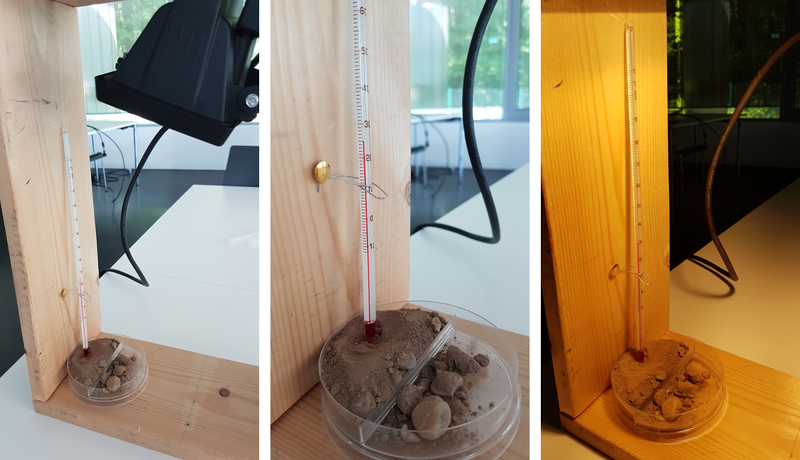
In this activity students simulate Earth’s behaviour with an hands-on experiment, learning how and why oceans on Earth can store heat more effectively than land, mitigating part of the global warming caused by the greenhouse effect. The activity simulates Earth’s behaviour with two samples of soil and water that are illuminated by a strong lamp: the recorded temperature change is generally slower for water than for soil.
One million Earths inside our Sun
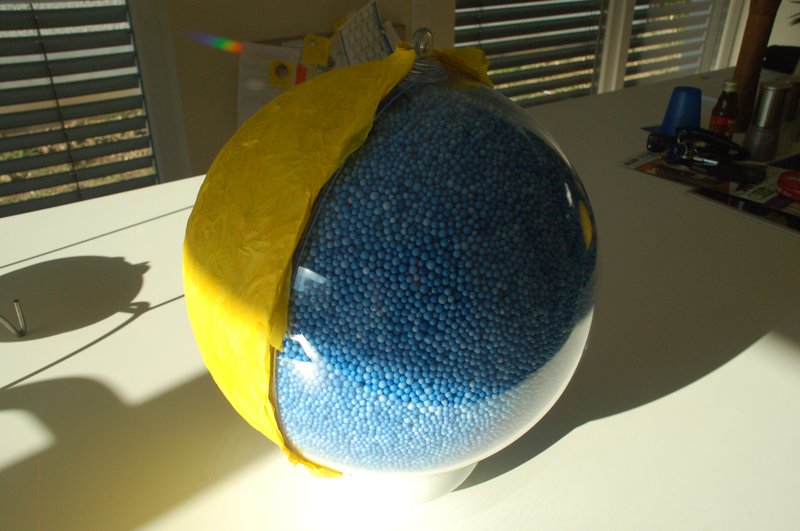
Students will learn how to build a model of the Sun that shows how much bigger our Star is compared to Earth and how far away it is from us. The model will give a sense of the scale of our Solar System to students of all ages (from kindergarteners to adults) showing a way to work with large numbers, making them manageable.
Orion constellation in 3D
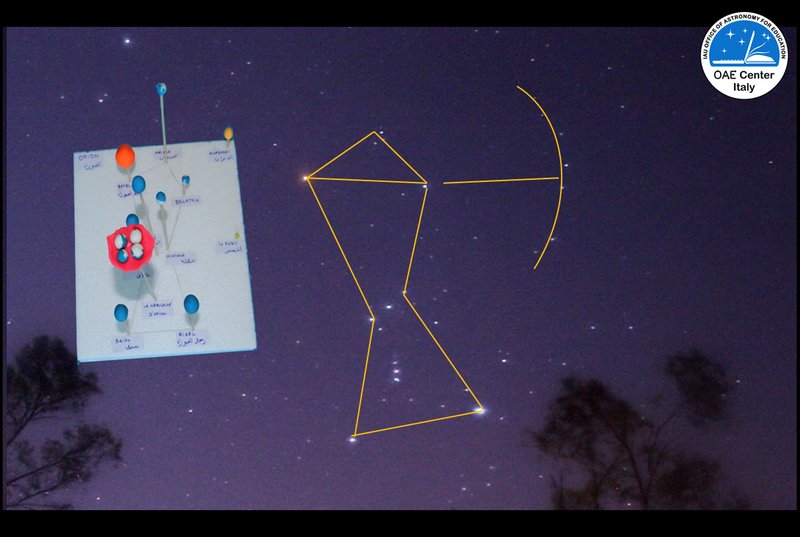
Looking at the night sky, all civilizations (ancient and modern ones) have identified many different shapes that they have called constellations. But what are constellations? Are they formed by stars that are really near one to the other? We will learn about constellations by building a 3D, hands-on model of the Orion constellation, one of the most famous and visible objects of the night sky. And by doing so, we will also learn a lot about stars, about mythology, astronomical distances and much more.
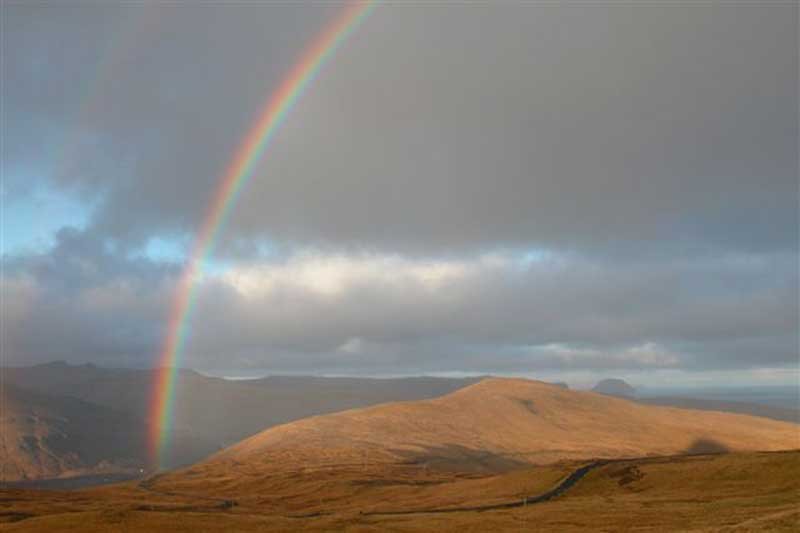
Reading the Rainbow
In this hands-on activity, we introduce students to the fundamentals of analyzing light and spectra, or spectroscopy. Using images from the Hubble Space Telescope (HST), students will undertsand that stars appear different colours. But why? Analysing a variety of light sources with a spectroscope, they will understand that the colour of an object emitting its own light relates either to the temperature of the object or its composition. Students will then apply these simple observations to astronomical objects in the orginal HST images, such as stars and nebulae.