Suggested Resources
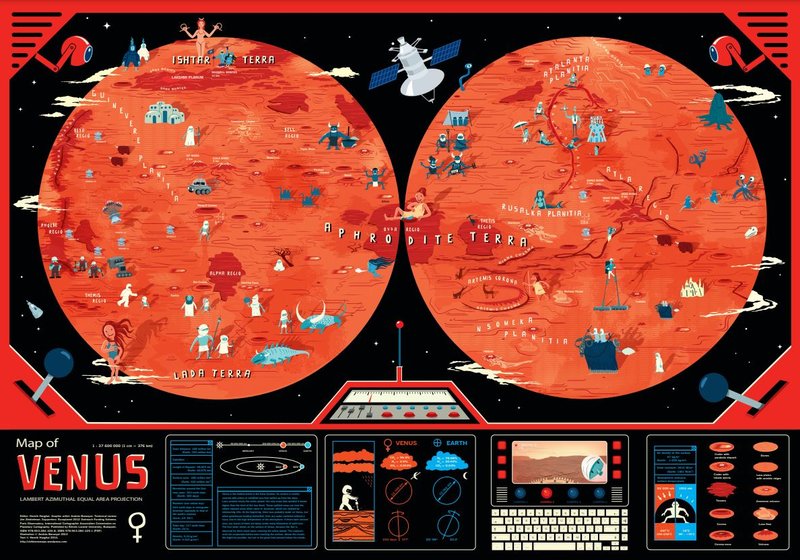
Children’s Planetary Maps: Venus
Using planetary maps, students will be able to read cartographic information and compare the environmental conditions of Venus to those Earth. They will understand the conditions needed for life to exist, and be able to explain why it cannot exist on Venus.
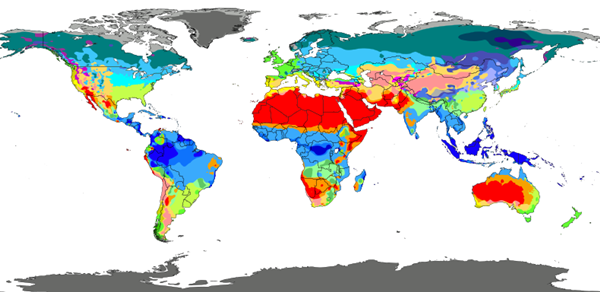
Continental climate and oceanic climate
What’s the difference between continental and oceanic climates? This activity introduces primary school students to this topic by showing that in the summer it is cooler by the sea than on the land and that water cools off more slowly than soil.
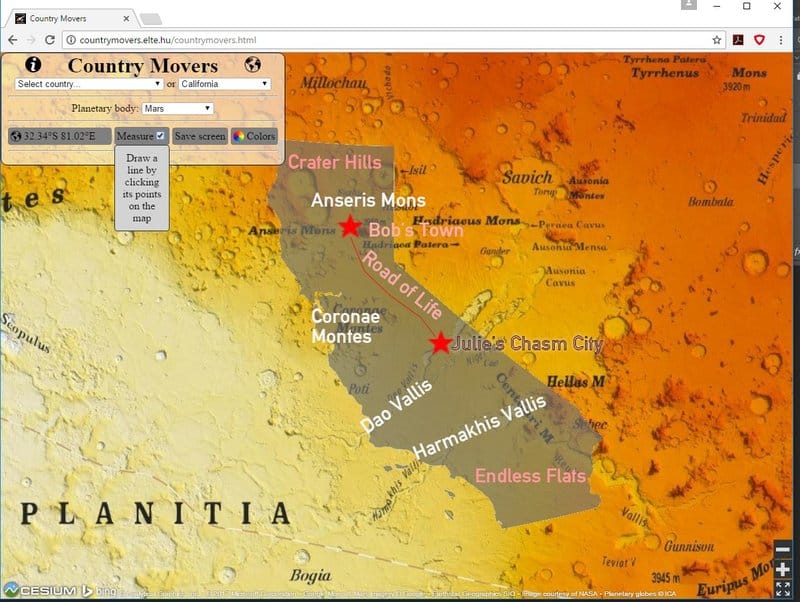
Country movers – visualizing spatial scales in Planetary and Earth Science
Students learn about local and planetary physical geography, geology, toponymy, planetary landing site selection and cartography. Using a Website called Country Movers to work with maps, students learn how to interpret photomaps or digital terrain models, getting an insight of the complex process of landscape evaluation and city planning.
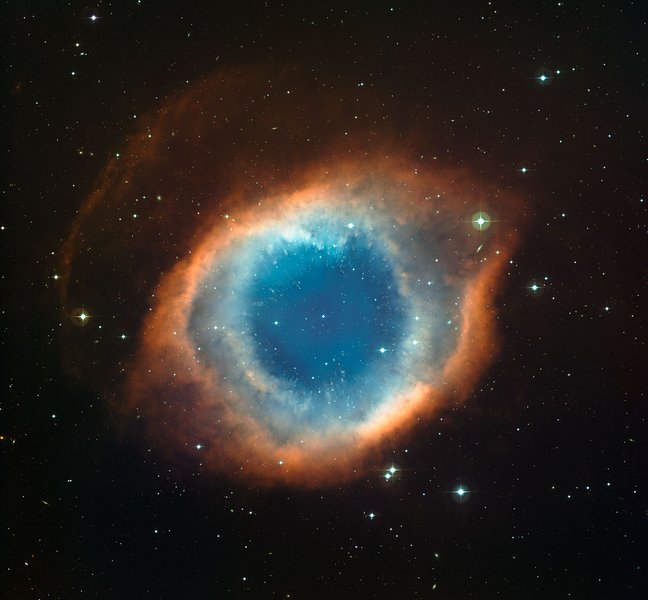
Create your own Astro-Music
By performing original musical improvisations, students enhance their knowledge of what astronomical phenomena are represented in images and experiment with creative ways of representing these using music. This activity engages students in first hand exploration of music and astronomy connections.
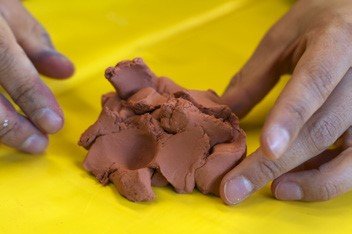
Creating Asteroids
In this activity, students familiarise themselves with asteroids. They discuss and build their own model asteroids, learning how asteroids are formed in the Solar System. At the end of the activity, each student has their own model asteroid made from clay.
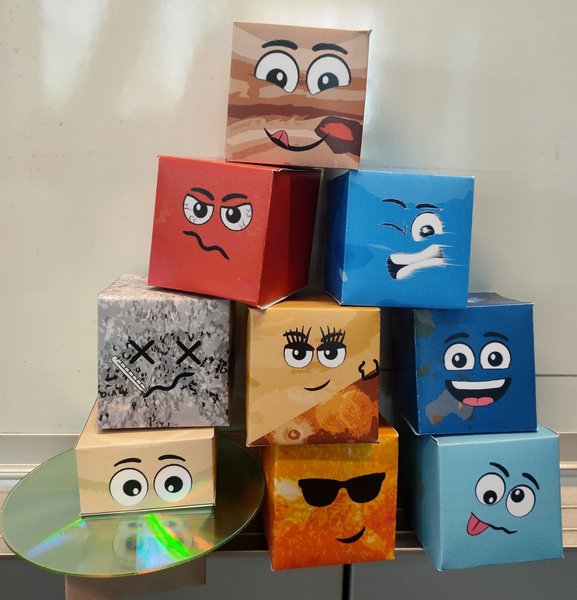
Cubic Planets
Earth, the happy planet. Mars, the angry guy. Jupiter, the big glutton. Did you ever imagine to build the planets of the Solar System as cubic characters with their own, brilliant personalities? Tailored for individual or team work, this activity allows students to bring the planets to life: they will just need simple materials like scissors, glue, and CDs/DVDs to build their own easy and fun 3D models and learn fascinating facts about their new friends. They will then focus on the true dimensions and distances of the planets, enhancing their understanding of the Solar System but also their curiosity, ability to work in team and love for science.
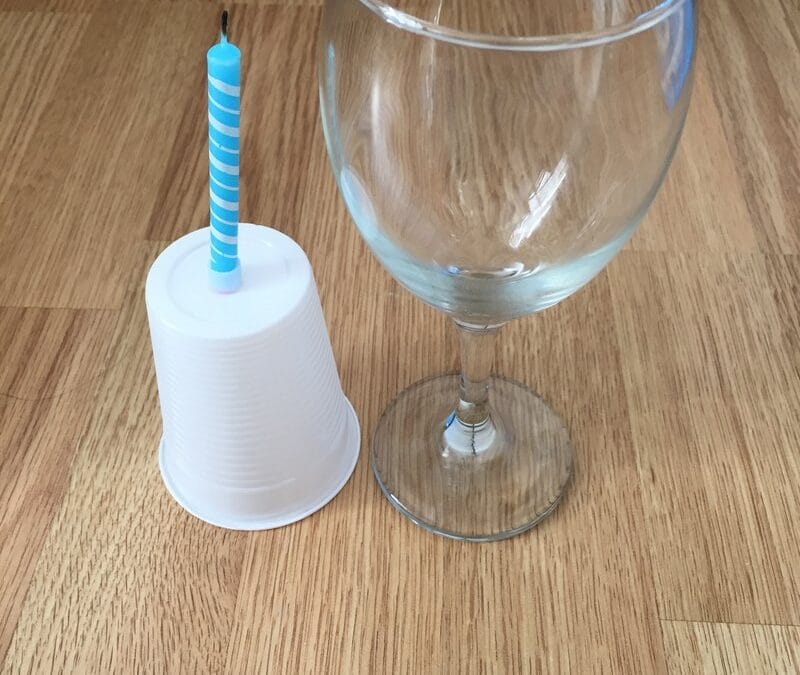
Dark matter & dark energy (Part 2) – Understanding the nature of dark matter and dark energy
In this activity students will investigate dark matter and dark energy learning about gravitational lensing. They also learn about the ongoing research in the field, playing the role of scientists and understanding the nature of science work.
Dark matter and Dark energy (Part 1) – Discovering the main components of the Universe
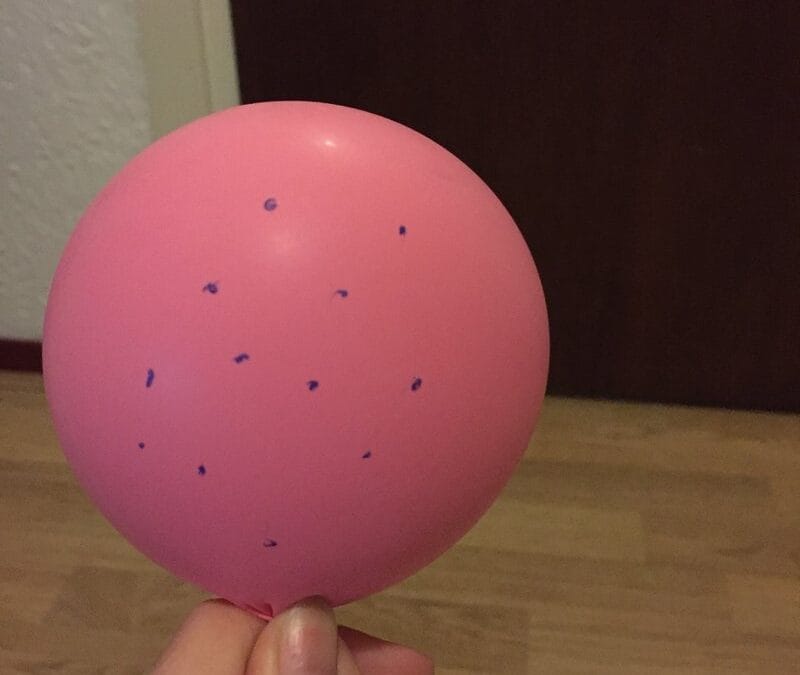
In this activity, students play role of scientists to explore the possible existence of other components of the Universe besides the normal matter. As they understand how dark matter and dark energy are discovered, they also realize that science understanding can change over time as new discoveries are made, adding to or modifying our prior knowledge. They also understand that what they can see is not everything in the Universe, there are still a lot of mysteries. This activity helps students develop scientific thinking and method of scientific investigation.
Day and night in the world
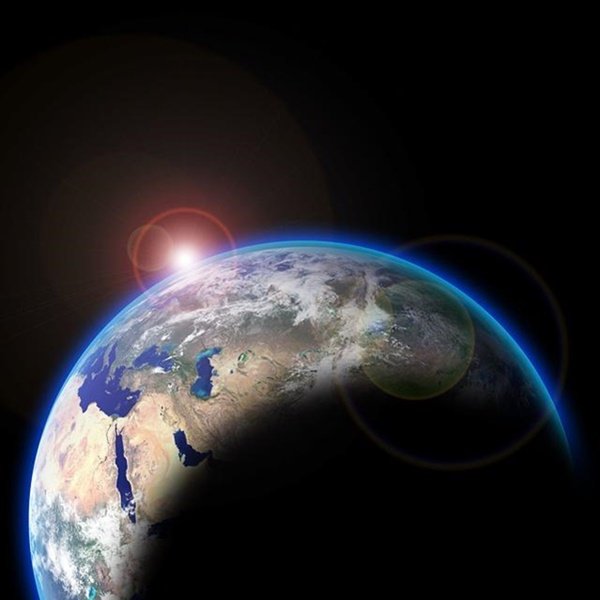
In this activity, students investigate the differences between day and night by comparing nocturnal and diurnal animals. They use a model of the Earth to demonstrate how day and night occur on Earth and explain that people and animals living on different parts of the planet experience different times of day.
Deadly Moons
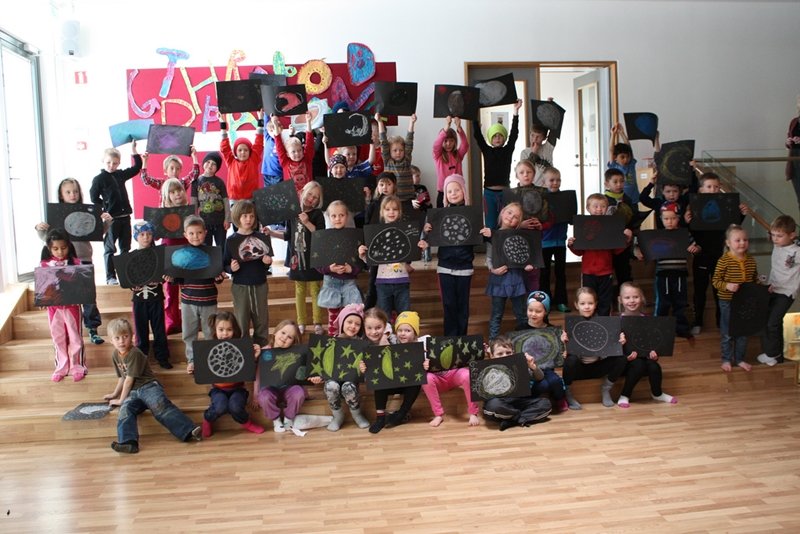
In this activity we ask students to make a protrait of their favorite moon. Dealing with the creative side, this activity makes students them learn more about the moons of the solar system. This combination of art and science engages the students to express their imagination more vividly and learn from others.
Design your Alien
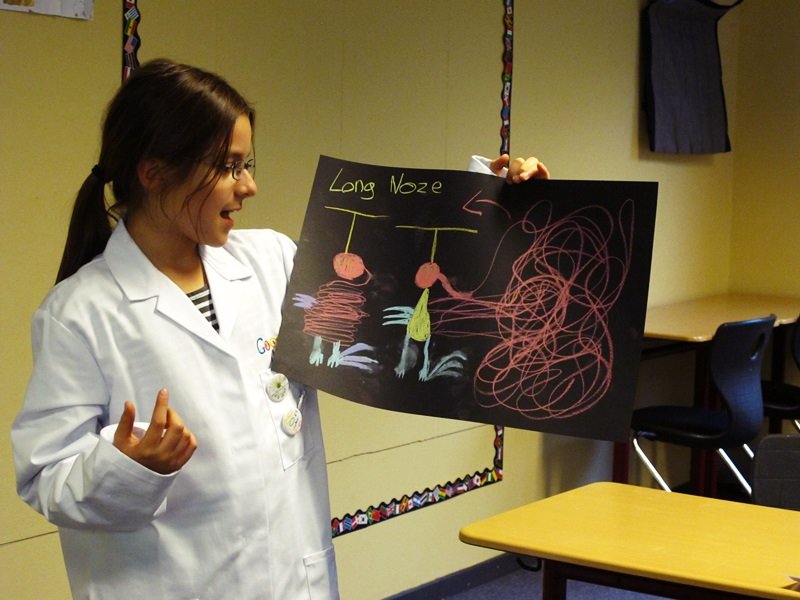
Wat makes the Earth “just right” for life? What does life need to survive? In this activity you are going to design your own alien, thinking about how life might adapt to different environments. The activity is organized in teams that will choose a different world of the Solar System and design an alien suited to this specific environment.
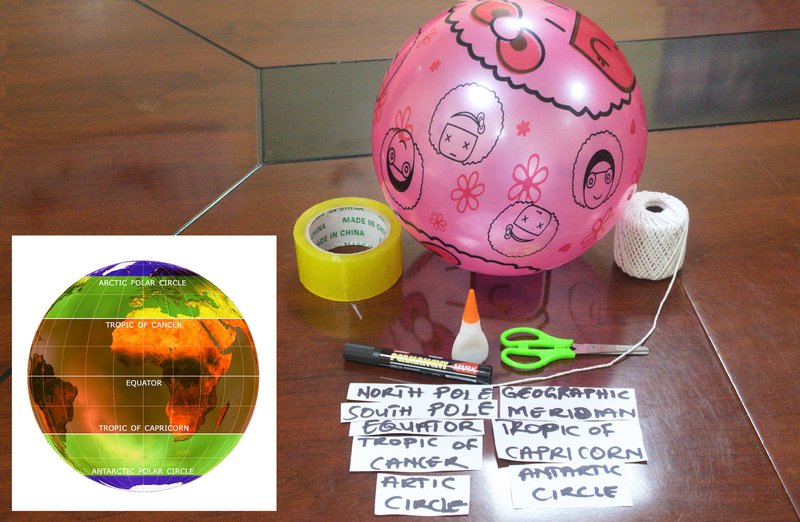
Discover Earth’s climate with a balloon
Using common objects from their environment, students go on an interactive journey to learn about how the Earth is divided into different climatic zones. Learners will be able to identify and visualise the various climate zones of our world via practical experimentation and imaginative use of materials. Through this practice, their knowledge of geography is expanded, and they gain a better grasp of how these zones impact global climate patterns. Students will build a tangible and memorable understanding of temperate zones by actively participating in the building of a model Earth, which will deepen their knowledge of the variety of habitats that make up our planet.

Distances in the universe. Galaxies
When we look up at the night sky with our eyes, almost all of the bright spots we see twinkling are stars in our galaxy, the Milky Way. If the night is dark, we can also see faint spots of light. These are the galaxies closest to our own, the Andromeda Galaxy and the two Magellanic Clouds, although these are only visible from the southern hemisphere of our planet.

Distances in the universe. Quasars
There are different methods for measuring the distances at which heavenly objects are located. Each method is useful for measuring a certain range of distances. In Unit 2 “Distances in the universe. Galaxies”, you can see how distances to the nearest stars in our galaxy are measured. Here we will learn other methods used to measure distances to more distant objects such as quasars.
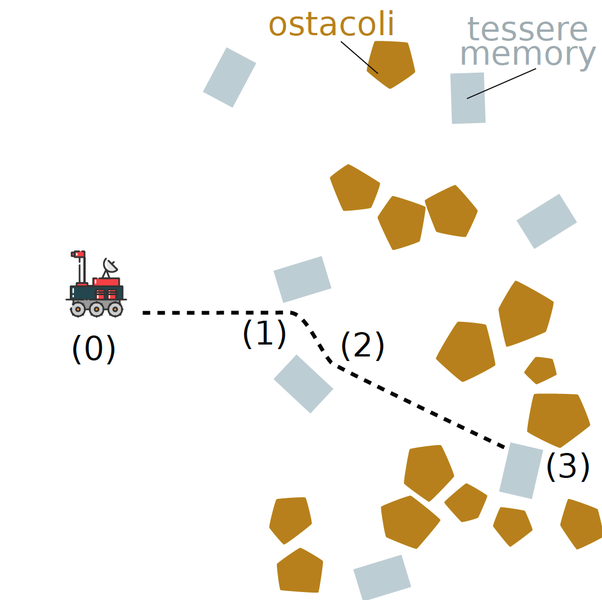
Driving on Mars
An educational, interdisciplinary game to drive a rover on Mars that underlines in a playful way the problems related to time-delay in communication in the exploration of the Solar System. With this simulation game, students will also understand the importance of team-working and planning, identifying the best strategy in for remote operations in the search for water on Mars.
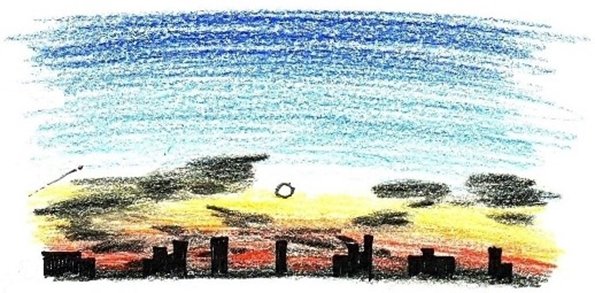
Evening Sky watching for students
There are many interesting features in the evening sky that can be observed with the naked eye: a wide variety of colours, clouds and stars, the subtle colours of stars twinkling, motion of the stars, and…that there is a starry sky even in an urban area! Students’s observations are guided by a question-and-answer approach and thanks to some practical activities to understand more about Earth and the sky.
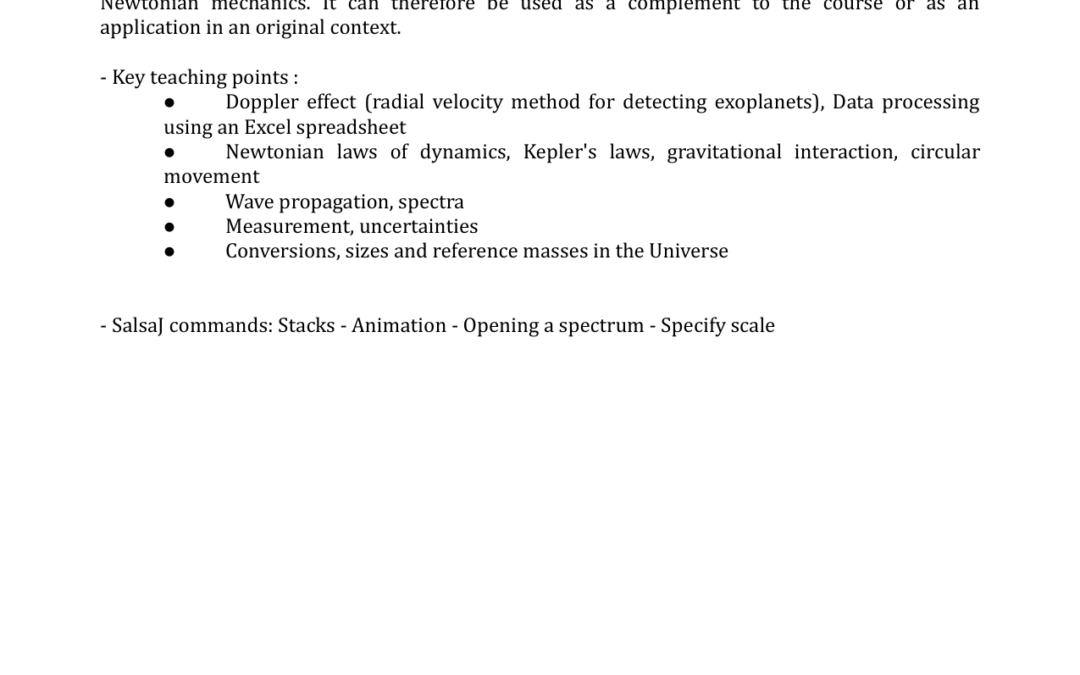
Exoplanet by radial velocity and spectra
In this exercise, we explain how an exoplanet orbiting a star can be detected using a precise measurement of the star’s velocity. The radial velocity method takes into account the fact that the planet and the star are both orbiting the centre of mass of the system under study. The aim is to measure variations in the radial velocity of the star relative to the observer as it approaches or recedes from the Earth. The radial velocity can be deduced from the displacement of the lines in the star’s s…
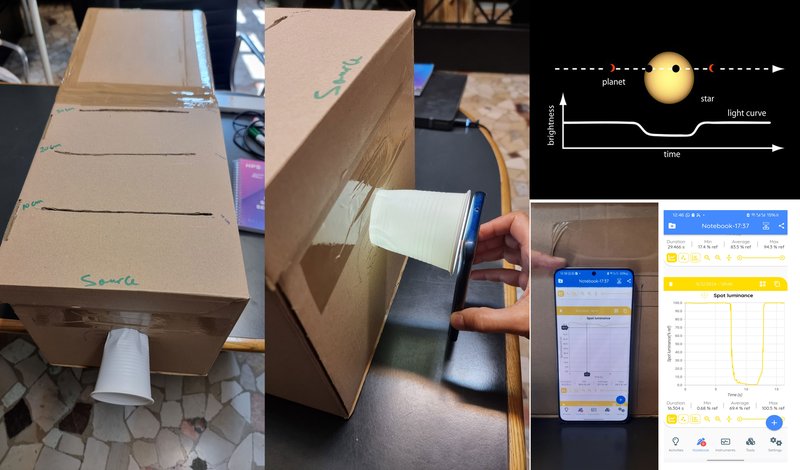
Exoplanet in a box
This activity introduces students to exoplanet detection using the transit method. Through hands-on activities, students will simulate an exoplanet transit using basic materials, measuring changes in light intensity as the “exoplanet” passes in front of the “star.” Students will model transit events, experimenting with different parameters of the exoplanets. Students will compare their models and findings with those of their peers and general properties of exoplanetary systems, enhancing their ability to communicate scientific concepts and results effectively. The workshop emphasizes inquiry-based learning, allowing students to design experiments, apply mathematical reasoning, and analyze data using the scientific method.
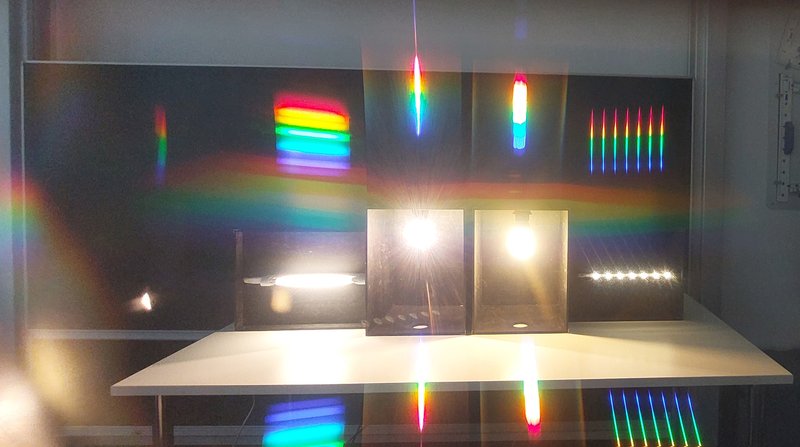
Find the hidden rainbows
This activity is about discovering the spectra around us and understanding the physical processes that make light. Using diffraction grating glasses, students will be able to view the spectra of everyday light sources. This will introduce line and continuum emission sources and can spark discussions on the nature of white light and how different light sources work.
Finding a number to measure Solar activity (Wolf number)
The Sun may seem like a static object, resting in the center of the Solar System while the planets orbit around it. But this is not the case. Our star is constantly undergoing processes of change that release large amounts of energy. In fact, the stability of its appearance and luminosity is due to a balance of forces that are in constant conflict. The processes that occur on the surface and in the atmosphere of the Sun, which produce solar wind, flares, and coronal mass ejections, are sometimes…