Suggested Resources

Inner planets – Venus
This activity is part of teaching unit 1, Inner and Outer Planets. You can find the introduction and teaching guide here.
Investigating the atmosphere – air takes up space
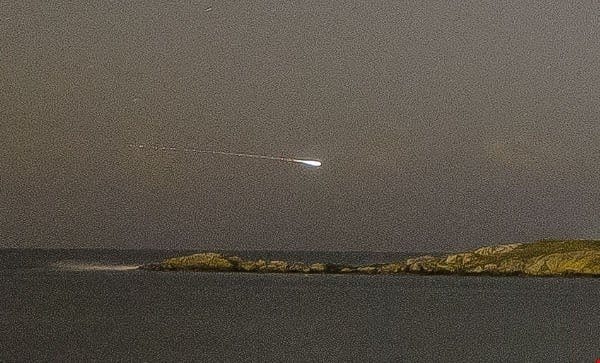
In this activity, students investigate different scenarios, which show that a gas occupies space and learn about what happens when objects hit the atmosphere. The activity can be followed by lessons about the atmosphere and its different layers or activities about greenhouse gases.
Is the Sun rotating? Follow the sunspots!
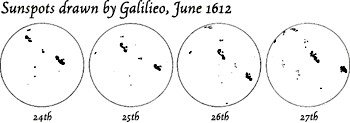
The Earth rotates on its axis, giving us night and day – but what about other celestial objects like the Sun? In this activity students will use real satellite images of the Sun (Solar Dynamics Observatory, SDO) to discover that the Sun also rotates about its own axis! For this they will use a technique used for the first time by Galileo Galilei himself, and still used by astronomers to this day: following the displacement of sunspots. Observing Galileo’s drawings, students will make hypotheses about the nature and motion of sunspots. To test their hypotheses and provide evidence for the rotation of the Sun, they will use a set of 27 consecutive daily SDO images from the 25th November to the 20th December 2014, containing a large number of sunspots. Students will make crude estimates of the rotation period of the Sun (without calculations) by following different sunspots. They will finally discuss and compare their findings.
Know Your Planets
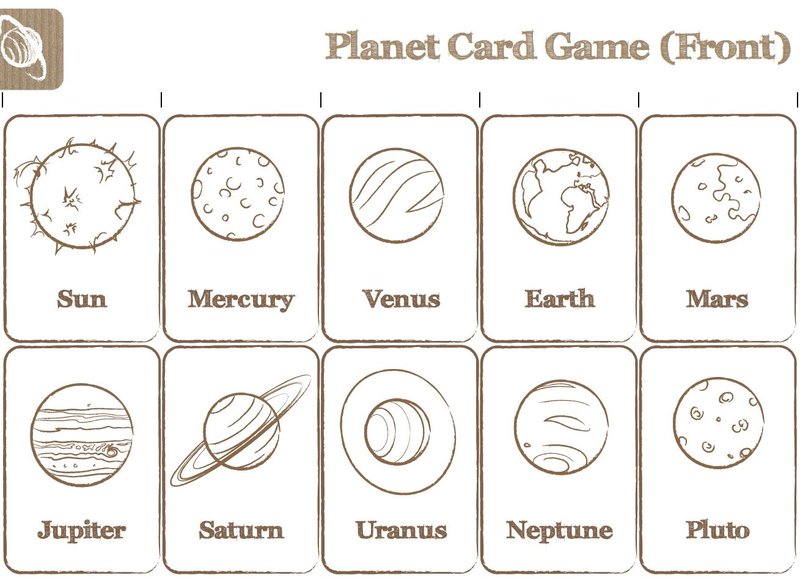
Students play a game of printable cards to become familiar with the planets of the Solar System. By playing, they learn that all planets go around the Sun and some properties about these planets. They also learn the name of the planets and their order in the Solar System.

Laws of Planetary Motion – Galilean Satellites
This activity is part of teaching unit 5, Laws of Planetary Motion. You can find the introduction and teaching guide here.

Laws of Planetary Motion – Mass of the Sun
This activity is part of teaching unit 5, Laws of Planetary Motion. You can find the introduction and teaching guide here.
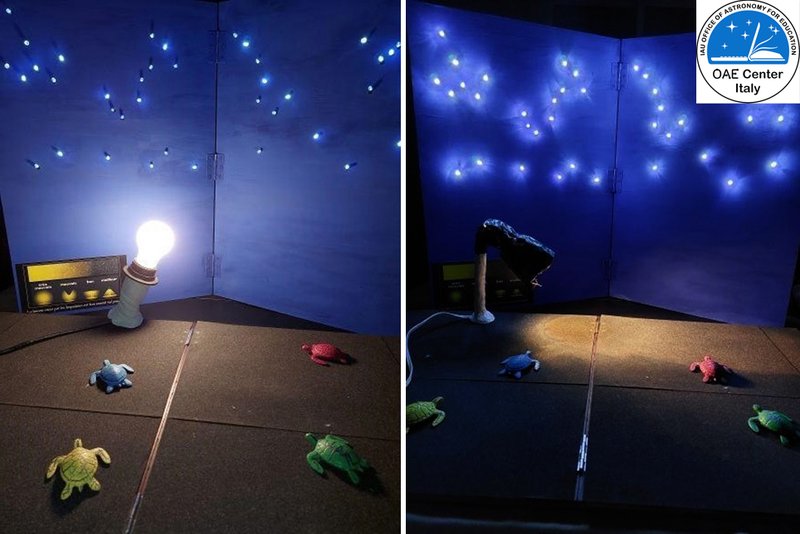
Let there be light… but not too much!
This hands-on activity involves the creation of a model to show the impact of light pollution on the night sky and raise awareness about this subject. By building this model students are encouraged to take responsibility for reducing light pollution: they can learn how to use outdoor lighting responsibly by only using it where it’s needed and in the required amount.
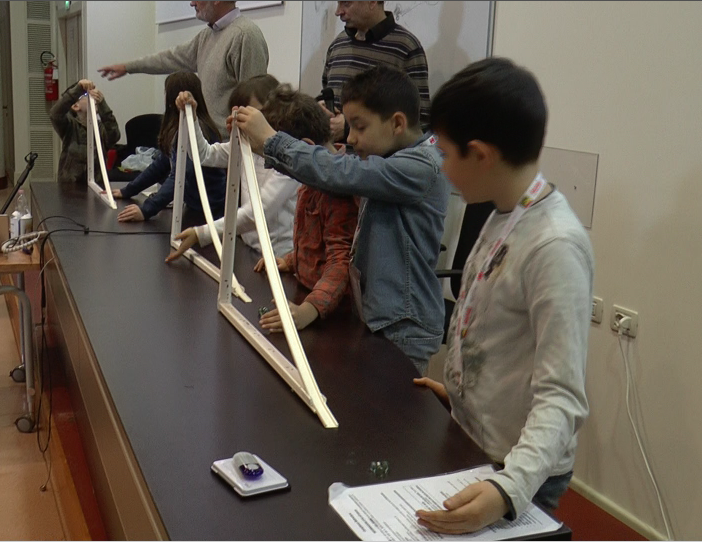
Let’s break the particles!
Let’s learn how to break particles to study their composition with a simple device (“the accelerator”). Students will study the effect of collisions between marbles, introducing various forms of energy, such as potential, kinetic and binding energy and investigating the possibility of transforming energy from one form to another.
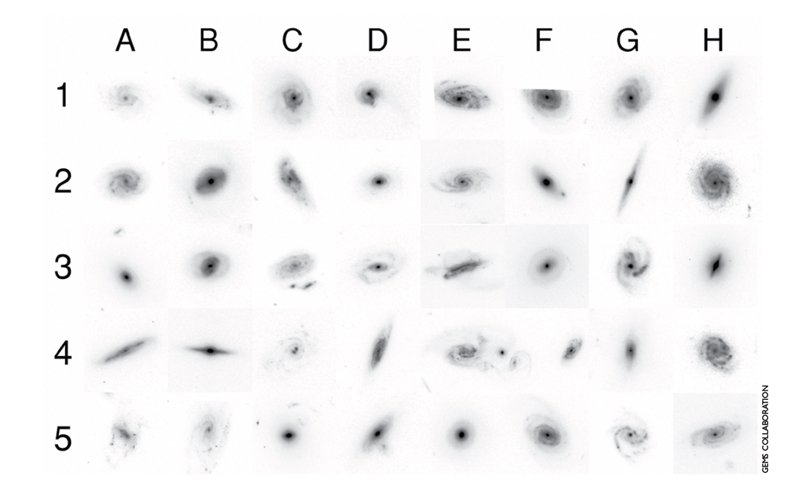
Let’s classify galaxies!
Students identify a classification of the galaxies making use of real astronomical data from the Hubble Space Telescope. By doing their own calculation, students will discover a “morphology-density effect” and then make hypotheses about the causes of this effect.
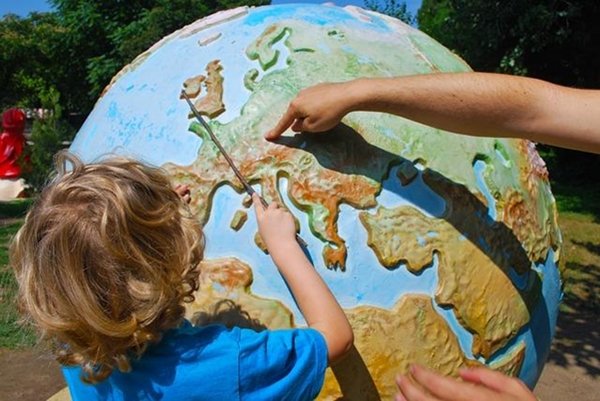
Let’s map the Earth
Let’s learn how to observe, discuss, and draw a map. With this hands-on activity, students learn how to identify different elements on a map like mountains and oceans, that each map has a scale and cardinal points. They also learn how modern maps are made using aerial photographs or GPS.
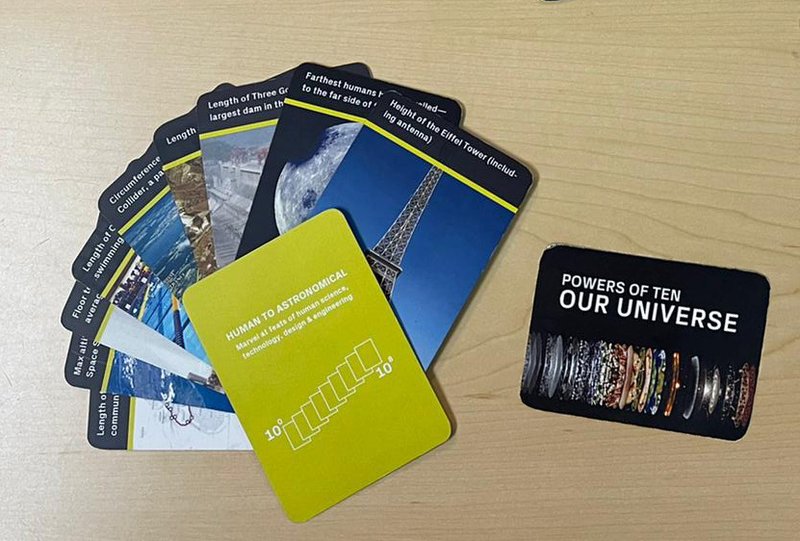
Let’s play with powers of 10
To understand the very diverse scales in Nature —from the smallest meaningful length (Plank’s length) to the size of the observable Universe, let’s familiarize ourselves with orders of magnitude or powers of 10! In this activity, students play a game of cards to achieve this goal and marvel at the range of lengths of objects in our universe!
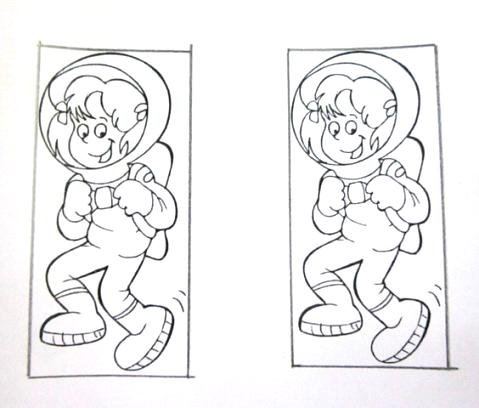
Levitating Astronaut
Let’s build an Astronaut to learn about magnetism and gravity! Students will address topics such as the forces of attraction and repulsion between magnets, and that objects are pulled downwards because of the gravitational attraction between the objects and the Earth. Thanks to this hands-on activity, students will practice questioning and investigating models.
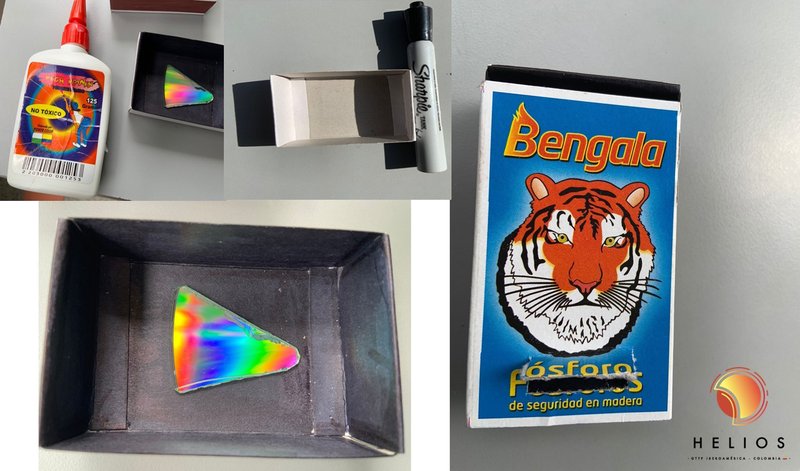
Light in a matchbox
By building a homemade spectrometer with simple materials like a CD and a matchbox, you can discover the visible light spectrum observing it quickly and easily and discovering the colors that compose it.
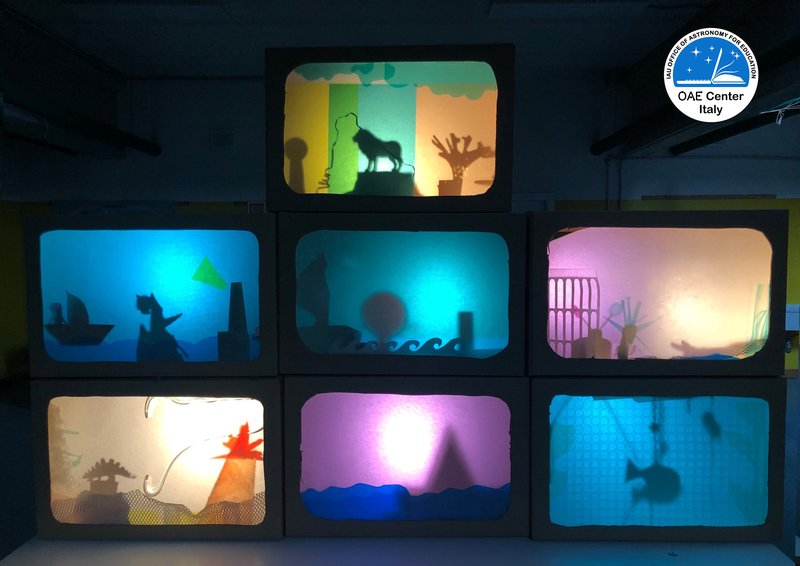
Light Play
In this activity students play with light and create their light sculptures. These unique installations are created in box-screens lit from the inside to become part of a collective installation that can be displayed as a piece of collective artwork. As a tinkering experience, “Light Play” is a workshop to develop and improve soft skills, and to experiment and play with light and become familiar with its interactions with different objects and materials.
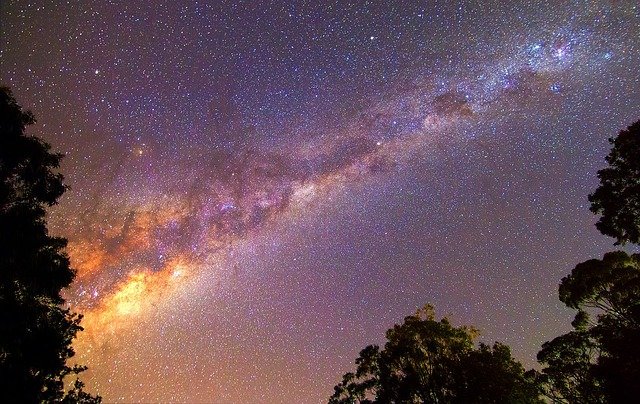
Living in the Milky Way
With this hands-on activity, students build a model of the Milky Way, learning what our Galaxy looks like, where we stand in it, about the objects it hosts and the distances between them. They will also learn about galaxies and how the Universe formed and how it evolves.
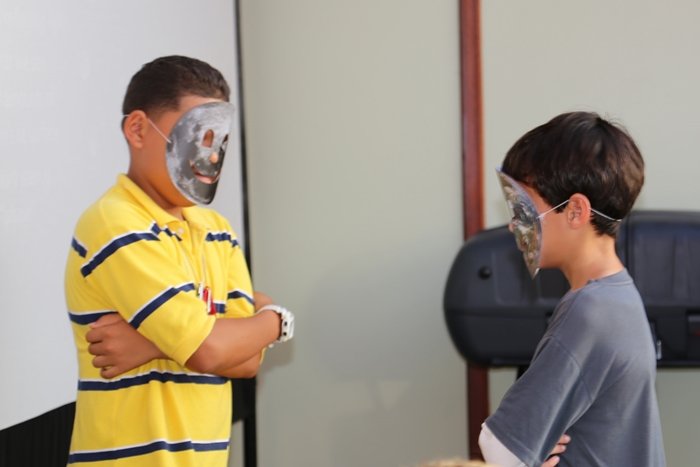
Lunar Day
In this activity students will mimick the orbit of the Moon around the Earth, demonstrating how the Moon always keeps the same face towards Earth. They will also learn about the difference between the duration of Earth and Moon day.
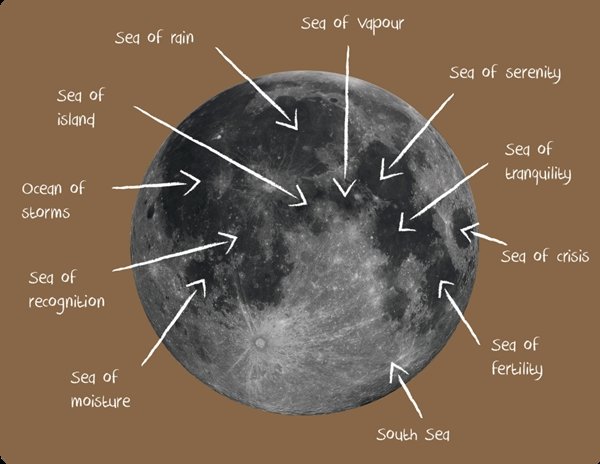
Lunar landscape in the classroom
In this hands-on activity, students simulate the impact cratering process to learn how the moon got its features and what factors influence crater size and shape. Through this activity, students also learn about the variety of asteroids and comets, the lack of atmosphere on the moon’s surface in comparison to the Earth, and gain an insight into scientific modelling.
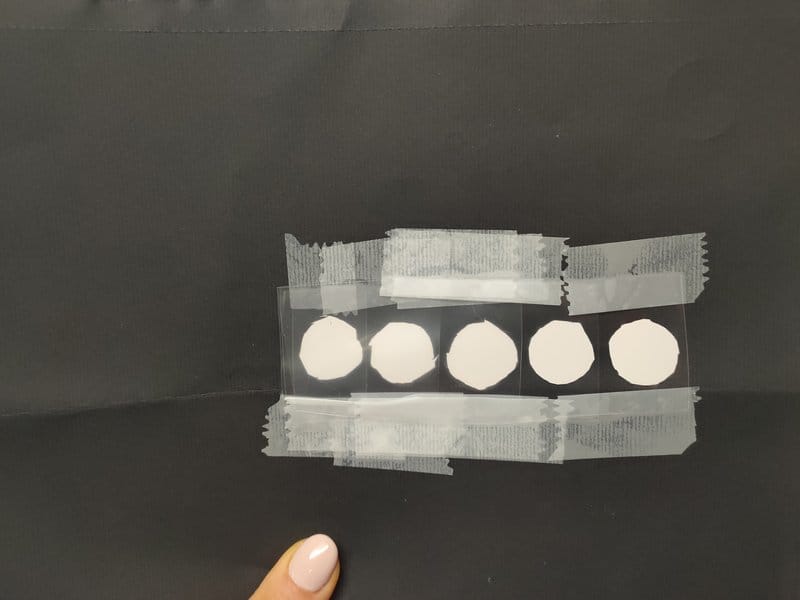
Magnitude Readers: how light pollution affects the Stars
What is light pollution, what are its impacts, and how can it be mitigated? In this activity, students will build a magntidue reader with very simple materials and use it to learn how light pollution affects the visibility of stars, by making simple experimental measurements and calculations.
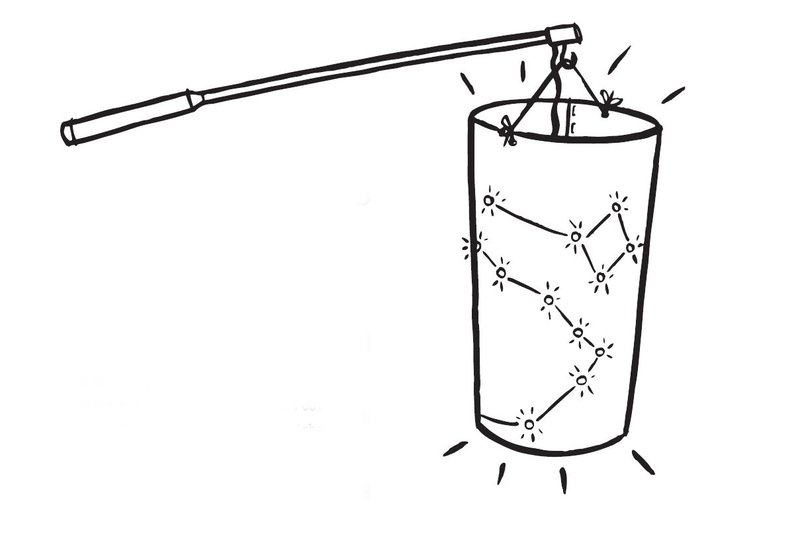
Make a Star Lantern
Students build a star lantern and by implementing this activity, they learn that people have created constellations. They learn that a constellation is composed of different stars and can recognise some of them.
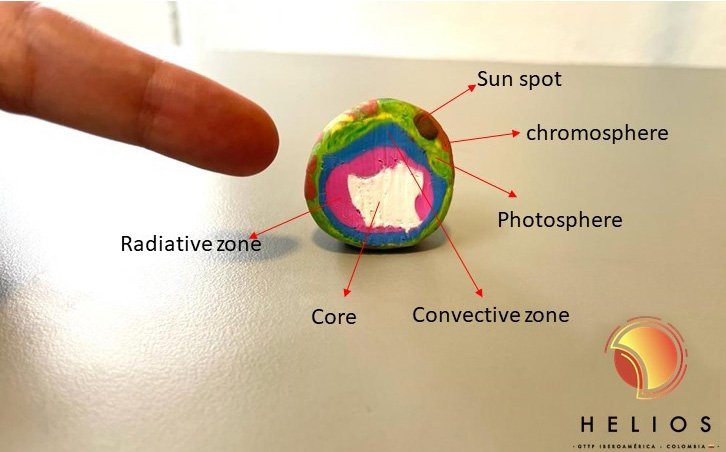
Make your own Sun!
The Sun is the nearest star and generates great interest in children and young people. Knowing its structure is important to understand how it works, its influence on our planet and to understand more about other stars in the Universe. In this activity, by building a model of the Sun with plasticine of different colors, children will learn about its structure in a playful and educational way.