Suggested Resources
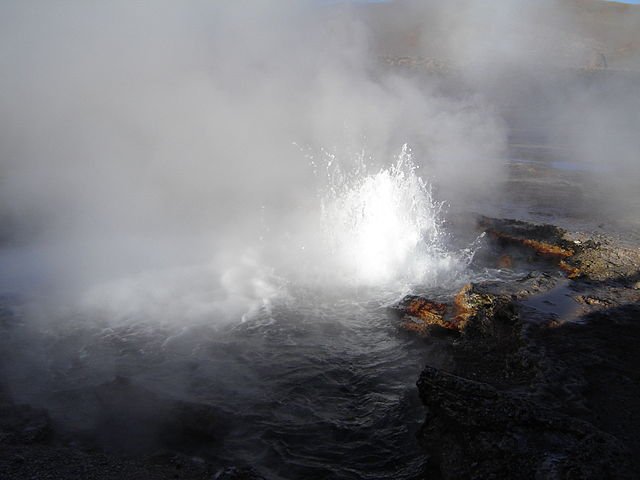
Fizzy balloons – CO2 in school
Carbon dioxide (or CO2) is very important for life on Earth: it is found all around us in the air we breathe, it is one of the most important greenhouse gases, and it is fundamental in photosynthesis. Through a practical demonstration, this activity introduces students to CO2 showing them that it is heavier than air, it can be used to extinguish flames and that it can sometimes have fizzy reactions!

Gas giants – Jupiter
This activity is part of teaching unit 4, Gas Giants. You can find the introduction and teaching guide here.

Gas Giants – Saturn
This activity is part of teaching unit 4, Gas Giants. You can find the introduction and teaching guide here.
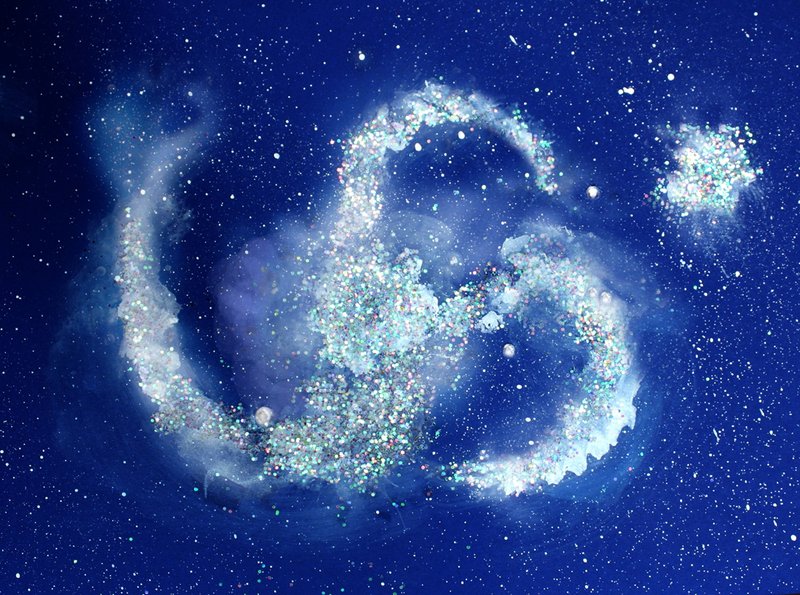
Glitter your Milky Way
What is our Galaxy like? Let’s learn to distinguish its basic characteristics by making a glittery artistic portrait of it with colors, brushes, glitter and a lot of imagination!
Globe at Night Activity Guide
How much light pollution affects our vision of the night sky? This guided observational activity engages students taking part in a global citizen science campaign to determine how light pollution varies in a given location. Through the process students also learn how to gather data and assess the impact of light pollution.
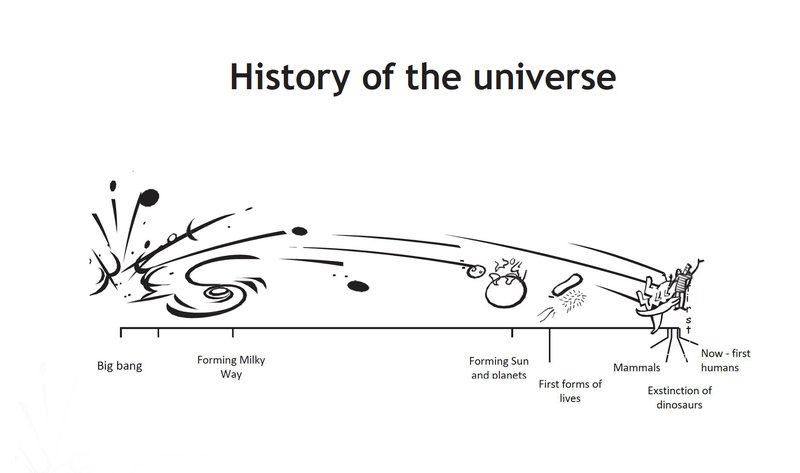
History of the Universe
With this activity, students create a timeline showing various events from the beginning of the Universe to the present day. They learn about the relative ages of the Universe, the Earth, and the existence of humans on the planet.
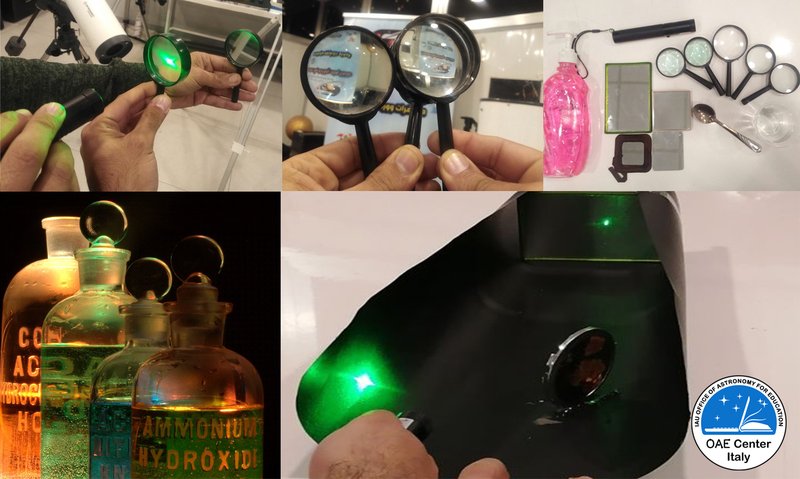
How do telescopes work?
Telescopes collect the light received from very dim and really far away celestial objects. Discover how they do this using very simple optics in a series of hands-on activities where we will guide light using objects like mirrors, lenses, lasers, glasses and bottles of water. Let’s discover different types of existing telescopes following the steps of famous scientists like Galileo Galilei and Hans Lippershey!
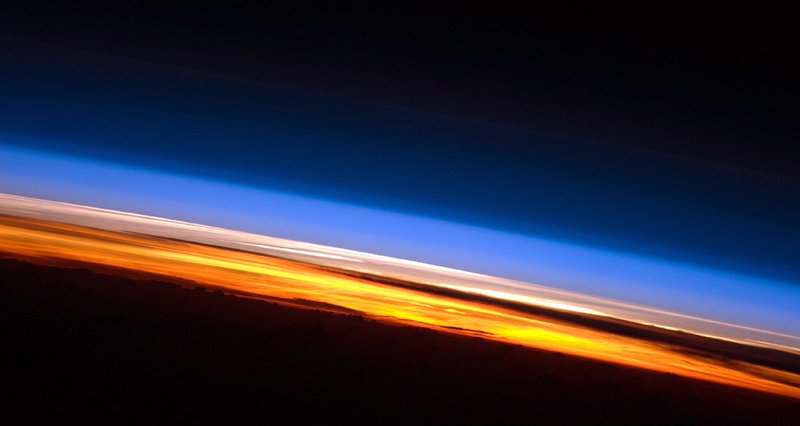
How High is the Sky?
Resource Link Access the complete activity resource Activity Information Partner Organization: OAE Age Range: 6 - 12 years Education Level: Primary to Secondary Duration: 1h Big Ideas Source: AstroEdu - International Astronomical Union
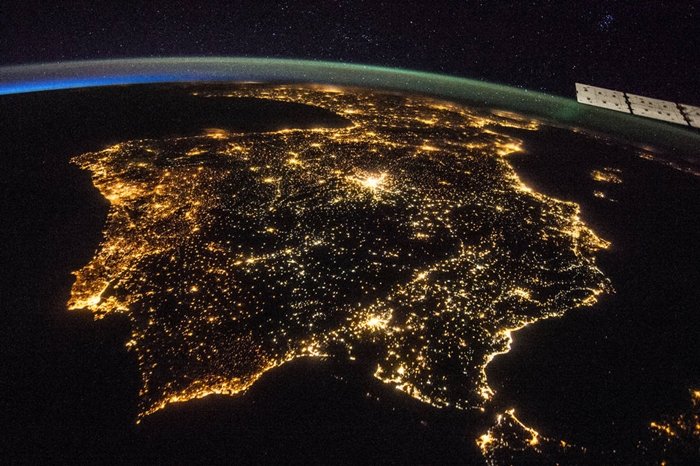
How many stars can you see at night?
Students conduct an investigation by working together and they explain what causes light pollution and present to the public their results and possible solutions to help solve this problem.
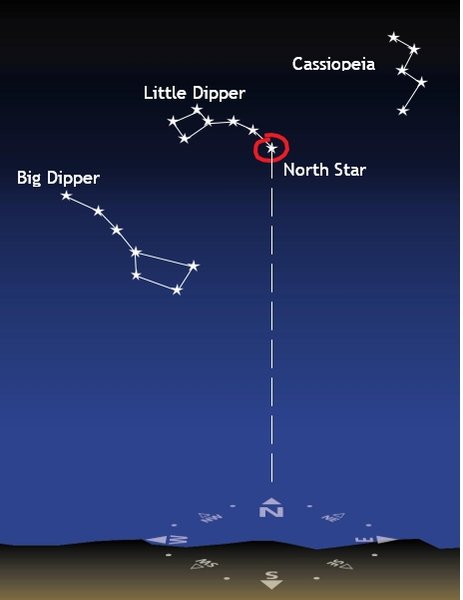
How to travel on Earth without getting lost
The Earth is a globe and we can define our position on it by using latitude and longitude. With this hands-on activity, students can find their location on a globe and describe it in terms of longitude and latitude, using a compass, the night sky and a protractor. Students learn other fun facts like why the direction of the midday sun changes over the year in Cape Verde.
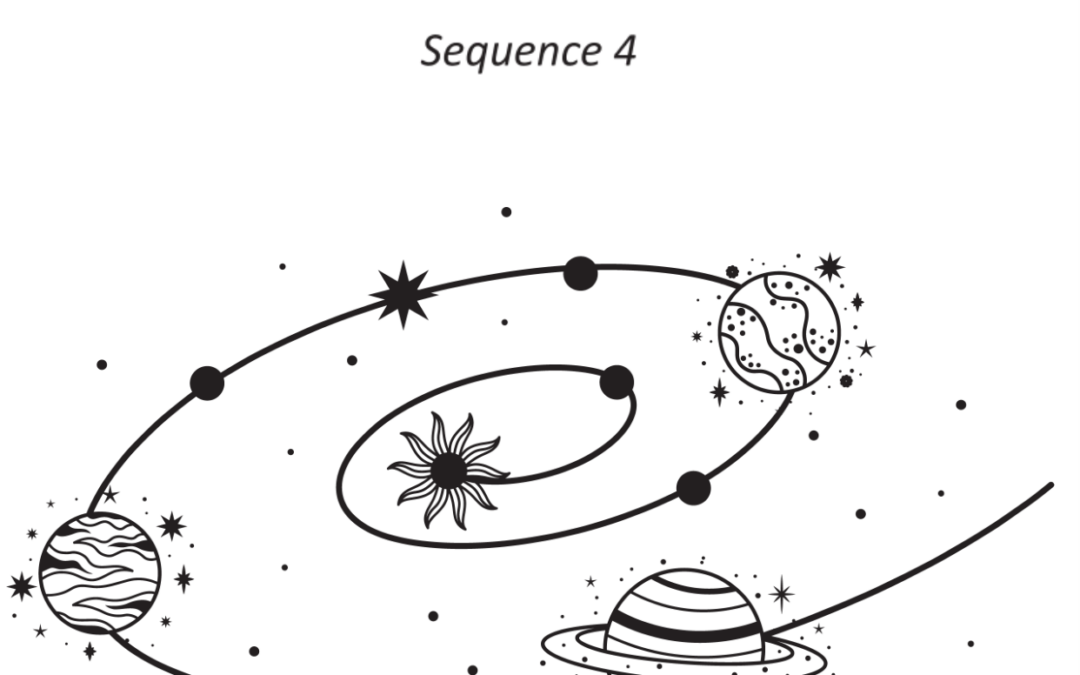
Human Orrery – anniversary
If required, start with a reminder of the objects in the Orrery and of the choreography. Then, the teacher brings pictures of birthday cakes, one cake per planet with the associated color. A birthday cake on Earth One learner “A” places himself on the earth picture (initial disc). The teacher puts the cake on it. Instruction: You (learner “A”) must walk around the orbit and stop after one year. Any one may say “stop” as soon as he believes it has been one year since the start. On HO: the learner…
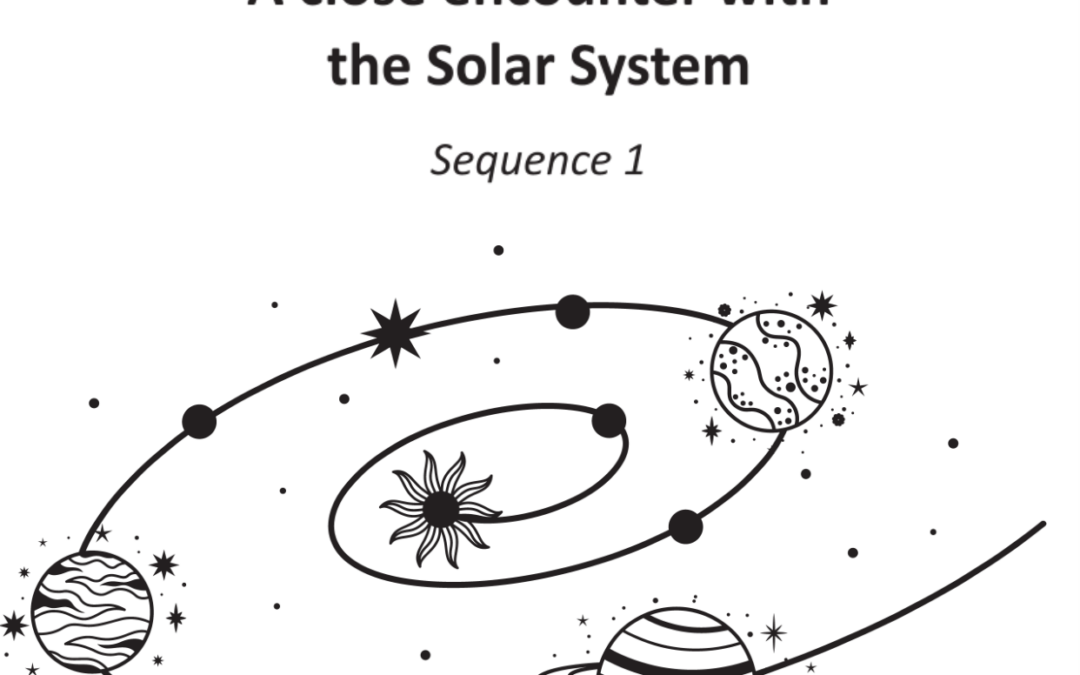
Human Orrery – discovery
Timing: 1h Age: from 5 years old Goals: 1. Astronomy: identify solar system objects and their orbits.
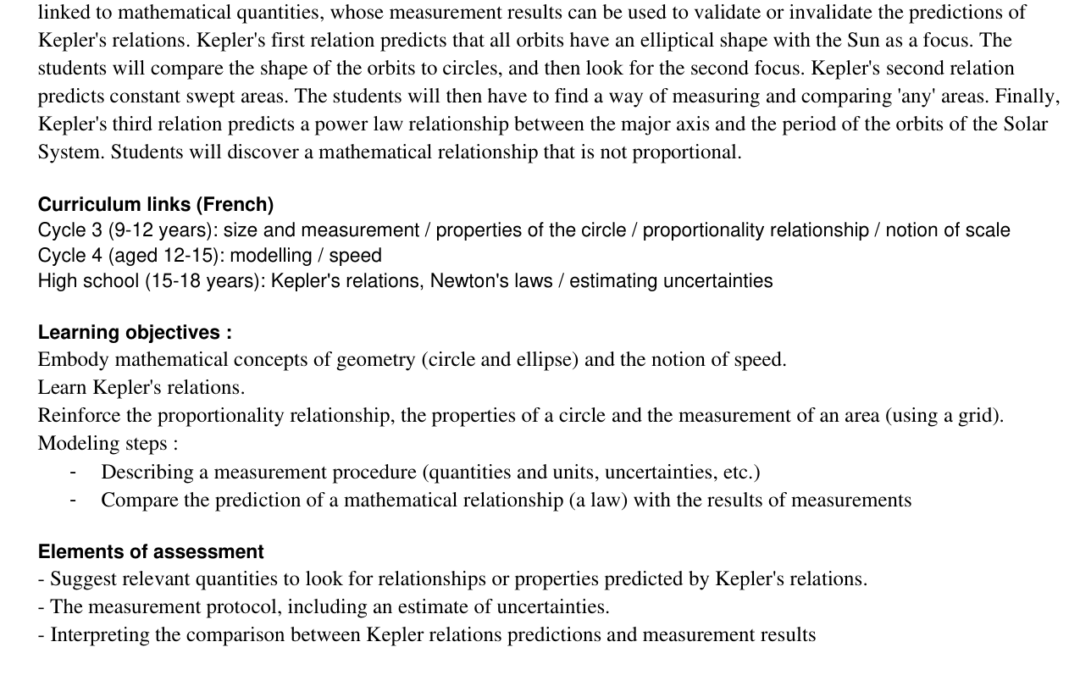
Human Orrery – Kepler laws
Prior to this workshop, the discovery of the Orrery In this session, the pupils will discover the Orrery (map). They will describe all the “signs” on the map. They will then learn how to get around. The workshop is divided into two phases, with two possible sequences. The first involves the whole class working on a single Kepler relation, and following the two phases three times (once for each relation). The second involves the whole class working on all three Kepler relations in the same sessio…
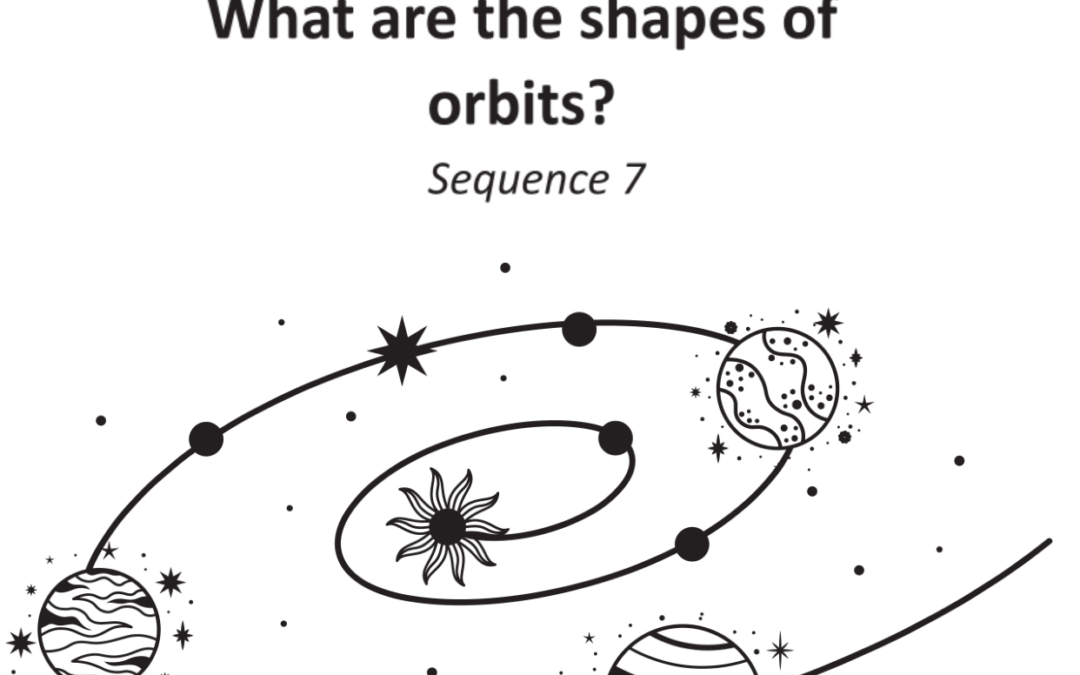
Human Orrery – shape of orbits
observations. The astronomer Kepler has succeeded in describing all orbits of the Solar System with one single geometrical shape. Let’s see if we can do the same” Phase 1: Introduction (5 min; whole group; on the tarp) “Let’s start to remind the planets and comet’s movements”: Start with a quick reminder of the objects in the Orrery and of the choreography (such as done in the discovery sequence). The teacher must be careful not to refer to the Sun as the centre of the Solar System. Phase 2: Hyp…
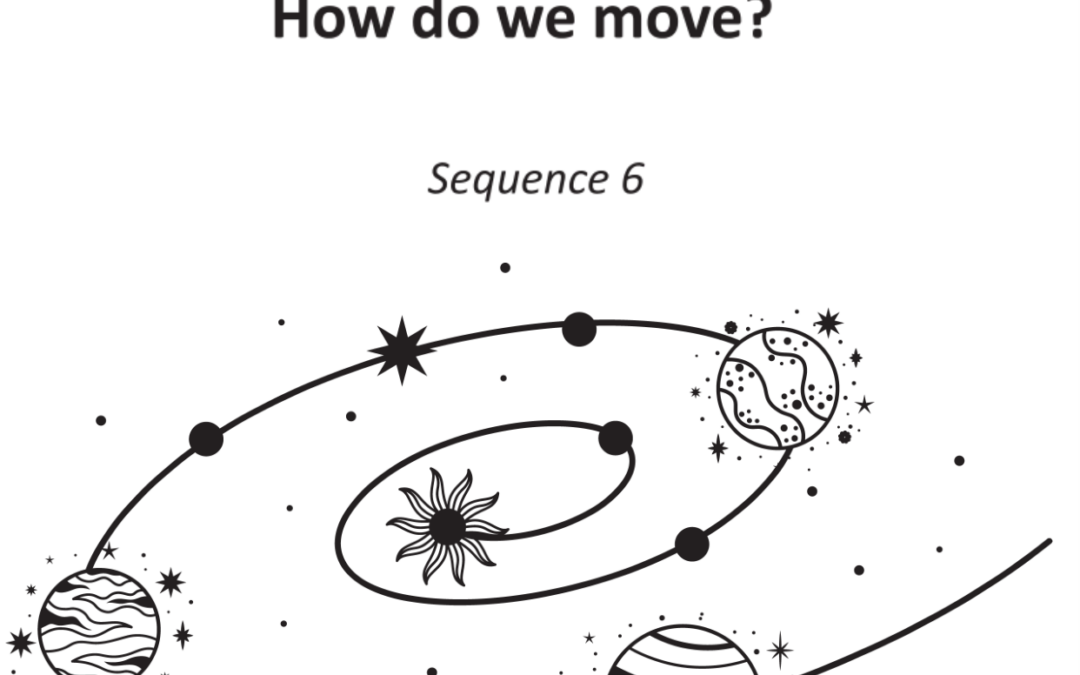
Human Orrery – speed
Timing: 50 minutes Age: 12 to 18 years old learners. Goals: 1. Focus on the 3-terms relations of the definition of velocity : velocity/duration/distance 2. Introducing speed as the ratio of duration and travelled distance in the cas of a
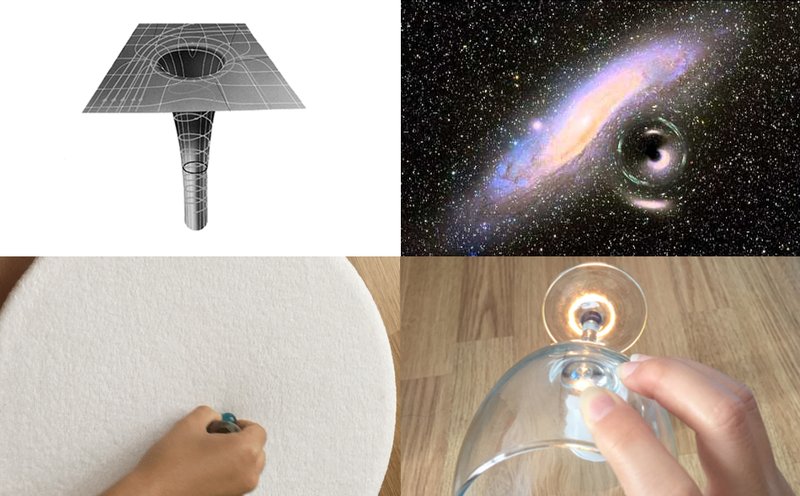
Hunting for black holes
In this activity students will investigate how black holes are observed based on the effect they have on their surroundings making a model to simulate the gravitational lensing phenomenon that results from the black hole’s gravity bending light.
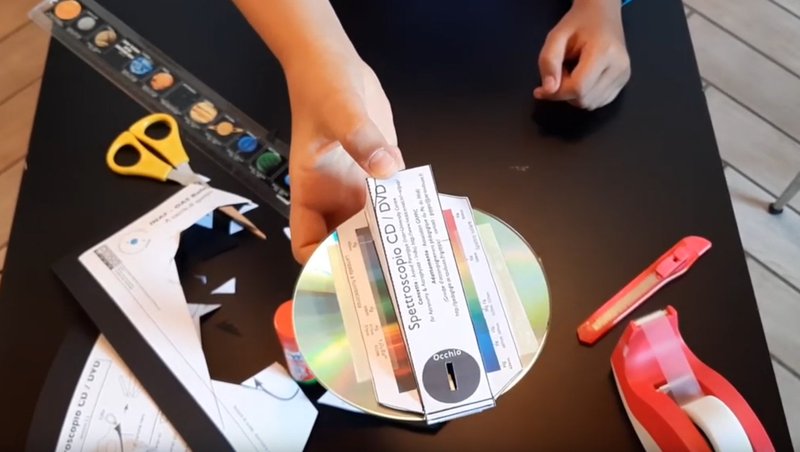
Hunting for spectra
Students will discover some aspects of light, through the creation of a spectroscope, a fundamental instrument in astronomy. Spectroscopes allow us to study the chemical composition and physical status of the celestial bodies we observe. The spectroscope built in this activity is not like the ones used by astronomers, but it will enable us to break up the light from luminous sources in a rainbow of colours, and discover a few features of light which otherwise we could not see. It is a portable instrument, that students can use when and where they like, so as to go hunting for spectra.
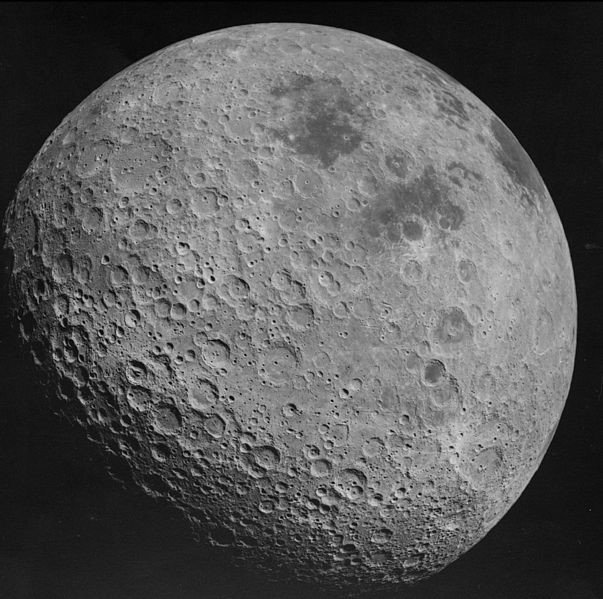
Impact Craters
With this activity, stydents learn how craters are made from the impact of an asteroid hitting the Earth and the effects this can have. With a fun, simple, but quantitative experiment, they will learn how the crater size depends on the impactor mass and the impact speed. They will understand the effects of past and recent strikes and the effects that big and relatively small meteorites can have for life on Earth.

Inner and Outer Planets
The Solar System contains the Sun, (at least) eight planets and their moons, and many smaller objects such as dwarf planets, asteroids, and comets.

Inner planets – Mars
This activity is part of teaching unit 1, Inner and Outer Planets. You can find the introduction and teaching guide here.